
Roof replacements can be expensive and time-consuming, especially when factoring in tear-offs, dumpster rentals, and landfill fees. In Broken Arrow, property managers are turning to membrane-on-membrane roofing to cut costs by 25–30% and finish projects 30–40% faster. This method skips demolition, installing a new membrane directly over the old roof, saving on labor and disposal while reducing waste. It’s ideal for buildings with structurally sound roofs, offering quicker installations and lower upfront costs without sacrificing durability. Plus, reflective TPO membranes can lower roof temperatures by 50–60°F, reducing cooling expenses during Oklahoma’s hot summers. With landfill fees rising, this approach is a smart way to manage roofing budgets effectively.
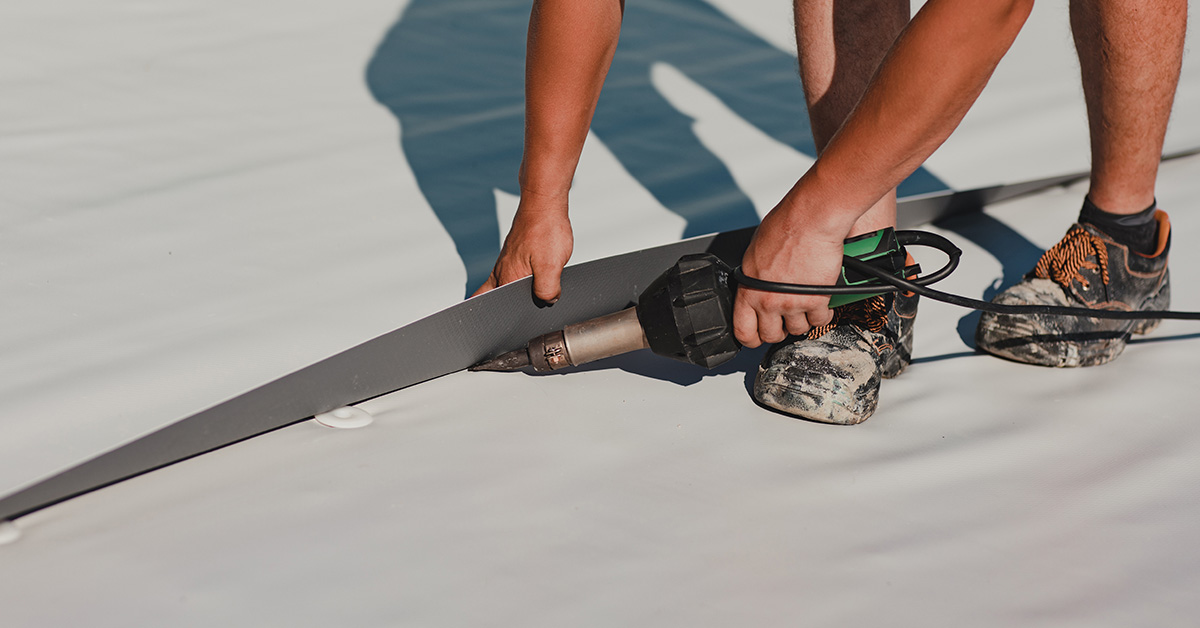
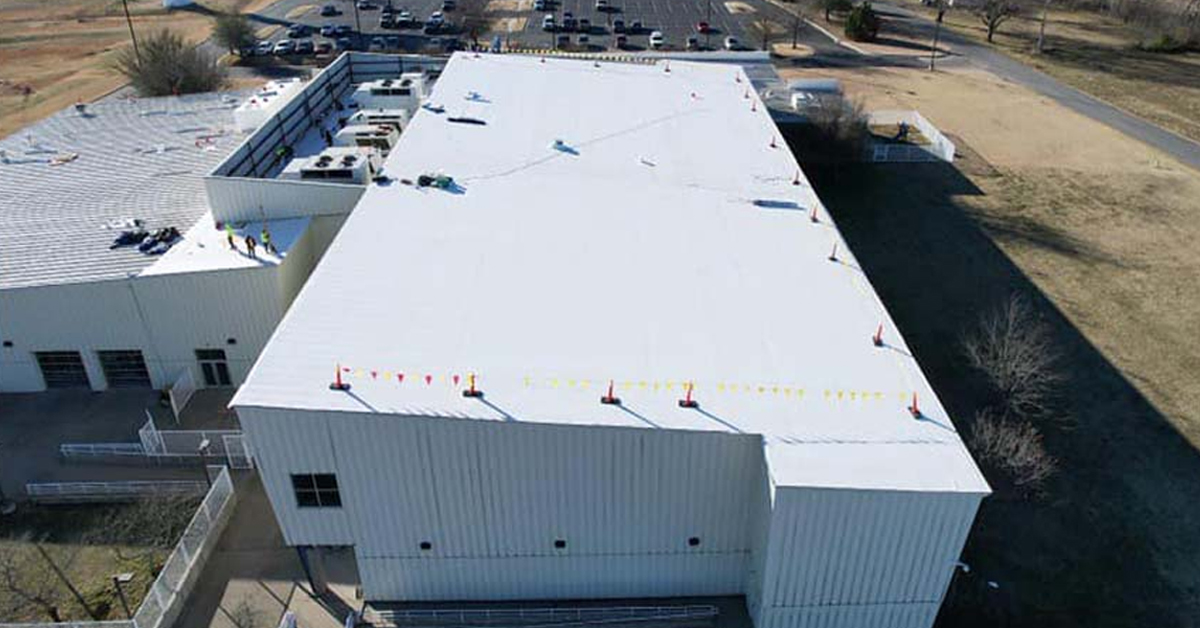
Flat Roof Overlay Systems – We use Duro Last roofing membrane to Recover a Sonic
sbb-itb-66ccccd
What is Membrane-on-Membrane Roofing and How Does It Work?
Membrane-on-membrane roofing, often called a roof overlay or re-cover, involves installing a new roofing membrane – such as TPO, PVC, or EPDM – directly over an existing roof. This method is commonly used on flat or low-slope roofs, which are typical for many commercial and industrial buildings in Broken Arrow. Before proceeding, the roof undergoes a detailed inspection to ensure it’s suitable for this approach.

The process starts with a structural inspection. Professionals take core samples to check for moisture and use infrared scans to identify any insulation damage. If the roof deck is solid and the insulation remains dry, the roof qualifies for an overlay. Once approved, the surface is cleaned and prepared. In some cases, only the top membrane is removed, leaving the undamaged insulation in place.
The Overlay Process Explained
The installation begins by rolling out the new membrane, which is secured using one of three methods: mechanical fastening, adhesive bonding (fully adhered), or ballasting. The seams of the membrane are then joined to create a watertight surface – TPO and PVC seams are heat-welded, while EPDM seams are sealed with specialized adhesives. Flashing is added around edges and roof penetrations, like vents and chimneys, to prevent leaks.
Building codes generally allow a maximum of two roofing layers. If a roof already has an overlay, a full tear-off becomes necessary for the next replacement. Additionally, the extra layer adds 2–3 pounds per square foot to the structure, so it’s critical to confirm the building can support the additional weight.
Once the new membrane is in place, the focus shifts to saving time and reducing costs.
How This Method Reduces Costs and Project Time
One of the biggest advantages of the overlay method is its ability to cut both labor and project timelines. By skipping the demolition and disposal steps, labor costs are significantly reduced. Overlays typically take just 1–2 days to complete, compared to 3–5 days for a full tear-off. This shorter timeline is especially helpful for occupied buildings, as it minimizes disruptions and keeps the property protected from weather during construction.
From a financial perspective, overlays are more budget-friendly, costing $4 to $6 per square foot compared to $6 to $9 per square foot for full tear-offs. Additionally, avoiding dumpster rental fees – usually $200 to $600 – makes this method even more affordable. While overlays generally last 10 to 15 years, compared to 20 to 30 years for a full tear-off, they provide an effective and economical solution without requiring a complete roof replacement.
Breaking Down the Savings: No Tear-Offs, No Dumpster Fees
Membrane-on-membrane roofing skips the need for tear-offs, which means no dumpster rentals or demolition labor. By avoiding the removal phase, property managers can sidestep the hefty costs of debris removal and disposal.
What Dumpster Rentals Cost for Roofing Projects
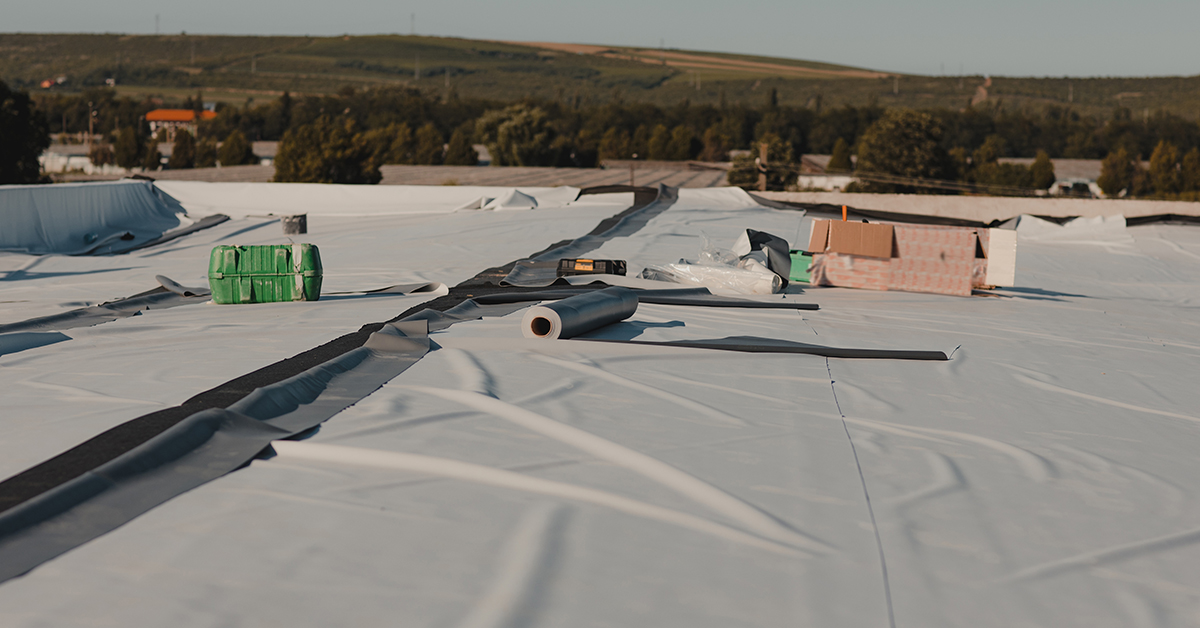
In Broken Arrow, dumpster rentals can eat up a big chunk of a roofing budget. A standard 20-yard dumpster costs between $350 and $500 for a 7-day rental, with a 2-ton weight limit. Go over that limit, and you’re looking at overage fees of about $75 per ton. Roofing debris, which can be quite heavy, often requires multiple dumpsters or a larger 30-yard container, which costs around $450 to $456. On top of that, landfill tipping fees add another $50 to $120 per ton, further inflating disposal expenses. With membrane-on-membrane roofing, none of this is necessary – there’s no old material to haul away. These savings on disposal fees make a real impact on the overall project budget, compounded by reduced labor costs.
Lower Labor Costs Through Simpler Installation
The savings don’t stop at dumpsters. Labor costs drop significantly with membrane-on-membrane installations because there’s no tear-off process. Tear-off labor is one of the most expensive parts of traditional roofing. According to Jack Gray, an independent commercial roof consultant:
"Removal and disposal of the old roof material will normally add around $1 to $2 per square foot to the total price of the job".
For TPO removal, those costs often range between $2.50 and $4.00 per square foot, and if you’re dealing with multi-layer roofs, it can climb to $3.00 to $5.00 per square foot. By eliminating this step, membrane-on-membrane roofing slashes labor expenses, making it a cost-effective choice.
How to Select the Right Membrane for Your Property
Choosing the right membrane for your building is about more than just cost – it’s about ensuring long-term performance, especially in Northeast Oklahoma’s challenging climate. A poor choice can lead to early failures, while the right one can provide decades of reliability.
What to Consider When Choosing a Membrane
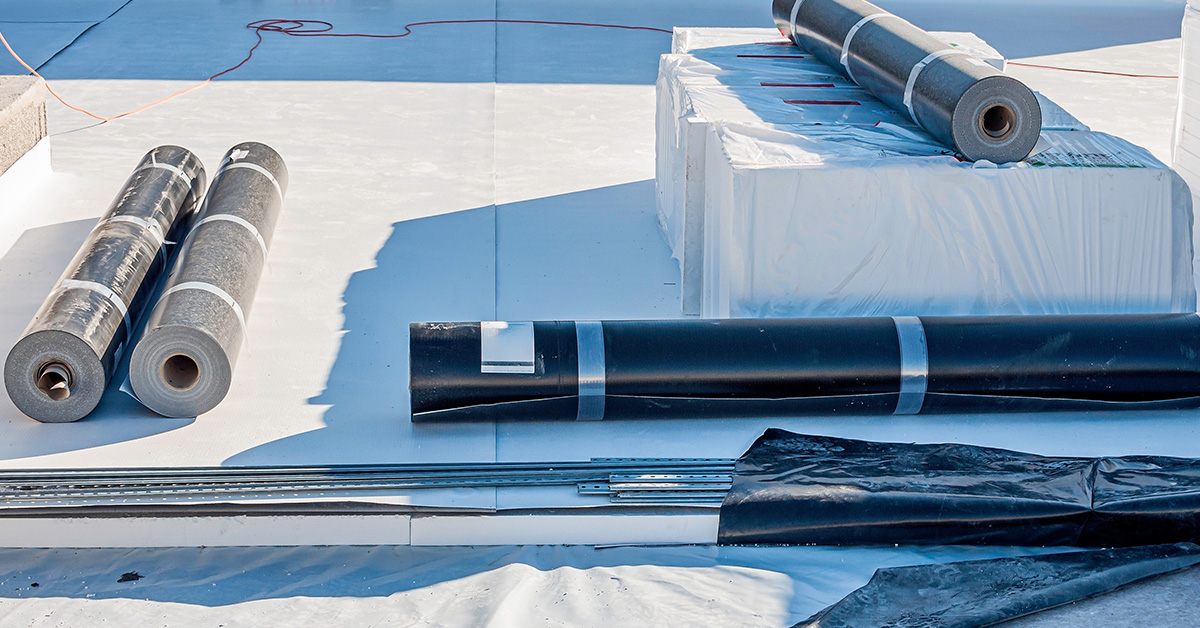
When selecting a membrane for a property in Broken Arrow, climate resilience is a top priority. The area experiences extreme weather, from blistering summers to freezing winters and strong winds. For example, properly installed TPO membranes can typically withstand wind gusts over 100 mph.
Energy efficiency is another critical factor. Reflective white TPO membranes can reduce roof temperatures by 50–60°F, cutting cooling costs during Oklahoma’s hot summers. For buildings like commercial kitchens or factories that deal with ventilation systems emitting oils or fats, PVC membranes are a better choice due to their strong chemical resistance.
Substrate compatibility is also key. Single-ply membranes require a stable and well-designed substrate to ensure proper drainage and long-term stability. Additionally, the installation method – whether mechanically fastened, fully adhered, or ballasted – depends on your building’s structural design. A professional inspection can determine if your building qualifies for a membrane overlay, potentially saving you from a full roof tear-off.
By weighing these factors, you can better understand the strengths and limitations of different membrane options.
Common Membrane Types: TPO, PVC, and EPDM
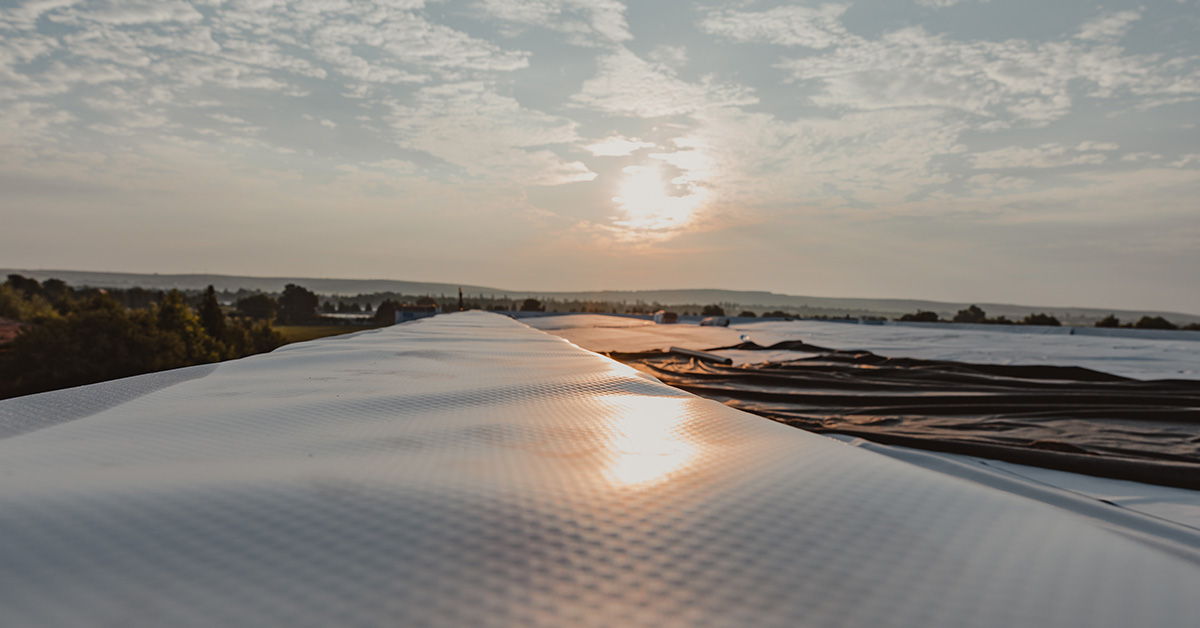
TPO (Thermoplastic Polyolefin) is currently the most popular single-ply membrane. Installed costs range from $5 to $9 per square foot. TPO is valued for its energy efficiency and heat-welded seams, which create a watertight bond. Available in 45-mil, 60-mil, and 80-mil thicknesses, thicker TPO options offer greater durability in severe weather. A well-installed TPO system can last 20–30 years and is fully recyclable at the end of its service life.
EPDM (rubber) membranes are known for their longevity, often exceeding 25 years. They come in thicknesses of 45, 60, and 90 mils and are usually the most affordable option upfront. However, their seams are joined using adhesives or special tape instead of heat-welding, which can be less durable. Additionally, the standard black color absorbs heat, though white-coated versions are available for better energy performance.
PVC membranes are more expensive but excel in specific applications. For buildings with restaurant exhaust systems or industrial ventilation, PVC’s resistance to oils and fats justifies the higher cost. Like TPO, PVC membranes feature heat-welded seams and are highly resistant to UV damage.
Pro-Tech Roofing offers free inspections at their 1107 N 105th E Ave, Tulsa, OK location. This service helps Broken Arrow property managers determine the best membrane type for their building’s needs and budget.
Why Property Managers Choose Pro-Tech Roofing for Membrane Solutions
Local Experience Serving Broken Arrow Properties
Since 2003, Pro-Tech Roofing has been tackling Broken Arrow’s roofing needs with over 20 years of hands-on experience. This extensive background equips them to handle the area’s unique challenges, including the high winds and hail that come with Tornado Alley conditions.
Pro-Tech holds Oklahoma Roofing License #80003685 and a Commercial Endorsement from the State Construction Industries Board, meeting all state requirements for large-scale projects. With a warehouse and showroom based in Tulsa, they can efficiently serve areas like Broken Arrow, Bixby, Jenks, Owasso, and Coweta.
Their work has earned a 4.7 out of 5-star rating from property managers and an A+ rating from the Better Business Bureau. One happy customer shared:
"He was so honest he called us in the middle of installing our new roof to let us know they wouldn’t need to fully repair our dormers which saved us some money."
This level of local knowledge and attention to detail ensures every project starts with a thorough inspection and a solid plan.

Free Inspections to Assess Your Roofing Options
Pro-Tech Roofing goes the extra mile for property managers by offering free roof inspections. These inspections help determine whether your building is a candidate for a membrane-on-membrane overlay or if commercial roof maintenance or repairs will suffice. During the inspection, the team evaluates key factors like roof integrity, drainage systems, fastener condition, and any signs of membrane wear or degradation. This ensures you get a clear picture of your roofing needs without any upfront cost.
Conclusion: Getting More Value from Membrane-on-Membrane Roofing
Membrane-on-membrane roofing delivers long-term savings for property managers in Broken Arrow. By skipping the tear-off process, you avoid rising landfill fees and cut upfront costs by 25–30% compared to traditional methods. Plus, installation is completed 30–40% faster, minimizing disruptions without the noise and mess of demolition. These time and cost efficiencies, combined with energy savings and extended durability, make this option a smart investment.
Reflective TPO membranes add even more value by keeping roof surfaces 50 to 60 degrees cooler than darker materials. This reduces strain on HVAC systems and lowers utility bills. Additionally, EPDM systems offer over 25 years of service life, providing lasting protection without frequent capital expenses.
For a small 5% increase in project costs, upgrading from a 45-mil to a 60-mil membrane can extend the roof’s lifespan by up to 33%.
Pro-Tech Roofing brings over two decades of local experience, backed by state licensing and a 4.7-star rating from property managers in the Tulsa area. Their free inspections are designed to assess your roof’s specific needs – whether it requires a full overlay or focused repairs – without any initial commitment.
These combined benefits explain why Pro-Tech Roofing has earned its reputation as a trusted partner for quality roofing solutions. Want to reduce costs and extend your roof’s life? Reach out to Pro-Tech Roofing at 1107 N 105th E Ave, Tulsa, OK to schedule a free inspection and see how membrane-on-membrane roofing can benefit your property.
FAQs
How do I know if my roof qualifies for a membrane overlay?
To figure out if your roof is a good candidate for a membrane overlay, take these points into account:
- The roof needs to be in solid structural condition, free of significant damage or moisture problems.
- Usually, there should only be one layer of existing roofing material.
- Flat or low-slope roofs are ideal for membrane overlays.
It’s crucial to have a professional roof inspection to verify these conditions and uncover any hidden issues.
Will a membrane-on-membrane roof void my warranty or affect insurance claims?
A membrane-on-membrane roof installation generally won’t affect your warranty or insurance claims as long as it’s properly installed and maintained. That said, it’s important to carefully review your specific warranty and insurance policies. Some may have unique conditions or restrictions you need to follow. Always double-check these details before moving forward.
What hidden problems can an overlay fail to fix?
While overlays might save money upfront, they fall short when it comes to addressing hidden problems like punctures, splits, shrinkage, or structural damage in the roof beneath. They also make it impossible to inspect the roof deck, which could trap underlying issues such as rot or decay. On top of that, overlays won’t fix drainage or slope problems, which can result in water pooling or leaks. For lasting durability, a complete removal and repair may be necessary.