
If your black rubber roof is driving up your cooling bills, switching to a white TPO roof could be the solution. Black EPDM roofs absorb over 80% of the sun’s energy, turning your roof into a heat trap that pushes indoor temperatures higher and strains your air conditioning. On a 90°F day, a black roof can hit 170°F, while a reflective white TPO roof stays around 120°F, cutting cooling costs by 15–35%. For a 2,000-square-foot roof, this can mean saving around $1,000 annually. With a lifespan of 20–30 years and energy savings that pay off the investment in 5–7 years, TPO offers long-term relief for your wallet and comfort. Pro-Tech Roofing provides free inspections and expert installation to help you make the switch.
 How Black EPDM Roofs Increase Your Energy Costs
Heat Absorption in Black EPDM Roofs
The problem with black EPDM roofs lies in their composition. These roofs contain carbon black, a material that soaks up UV rays and converts them into heat energy. Essentially, your roof acts like a giant heat sponge.
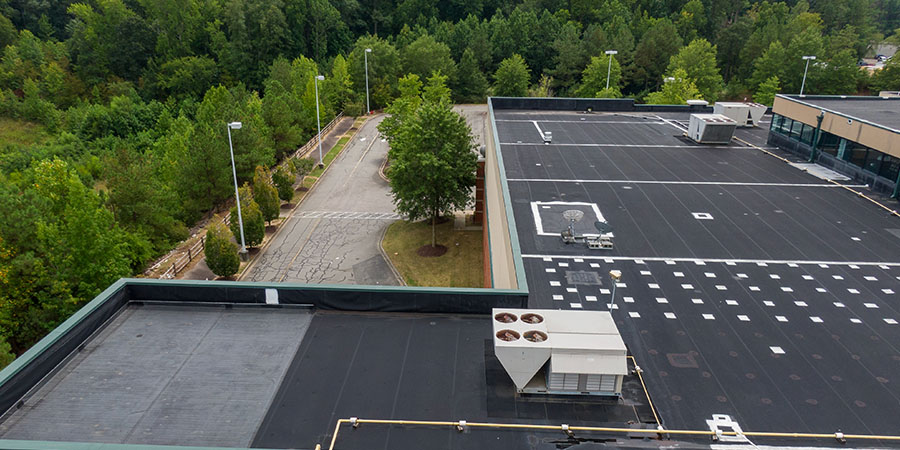
On a 90°F day, black EPDM can absorb over 80% of the sun’s energy due to its carbon black content. This pushes roof temperatures to a blistering 160°F–170°F, which can raise indoor temperatures by 10°F to 15°F. The heat doesn’t just stay on the roof – it radiates into the building, forcing your air conditioning system to work overtime.
This constant heating and cooling cycle also causes thermal shock, which stresses the roof’s seams and increases the risk of leaks. Over time, these stresses degrade the roof’s performance, amplifying energy inefficiencies. The result? Higher energy bills and a roof that’s working against you.
Financial Impact on Homes and Businesses
The heat absorbed by black EPDM roofs directly impacts your wallet. As the roof radiates heat into your building, your air conditioning system has to work harder to keep indoor spaces cool. This increased energy demand drives up utility bills and puts additional strain on your HVAC system – especially in hot regions like Oklahoma.
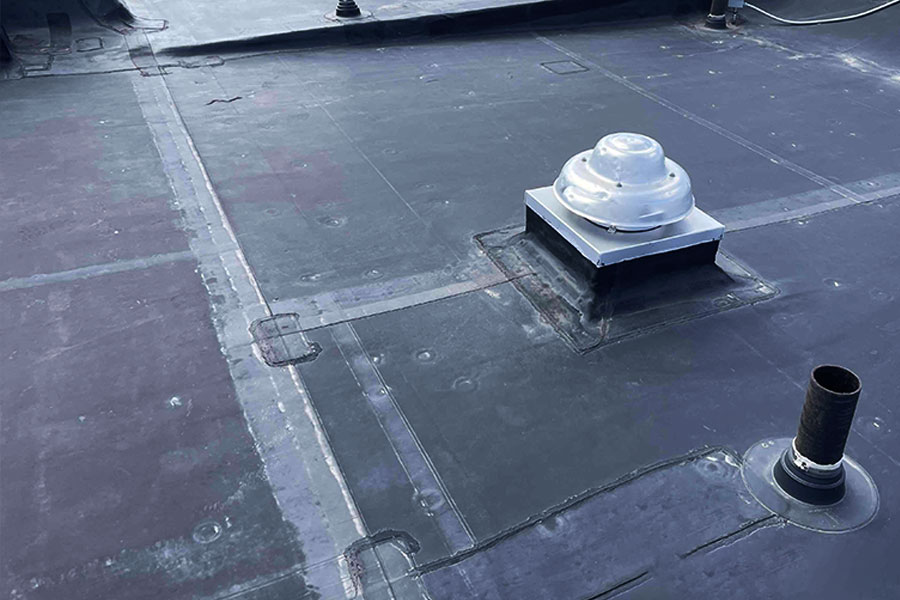
For homeowners and businesses, this can mean cooling costs that are 15% to 35% higher during warmer months. For instance, a commercial property owner noticed a 22% drop in summer cooling costs after replacing a black roof with a white TPO roof in 2024. The weather conditions were nearly identical, making the savings undeniable.
"The math is simple: less heat entering the building means less energy spent removing that heat." – Fakhir, Professional Roofer
On top of higher utility bills, the added strain on your air conditioning system can lead to wear and tear, shortening its lifespan and increasing replacement costs. Whether you’re at 1107 N 105th E Ave, Tulsa, OK, or elsewhere in the hot climate of Northeast Oklahoma, a black EPDM roof could be silently draining your resources. Switching to a more energy-efficient option, like a white TPO roof, can make a noticeable difference in both comfort and costs.
sbb-itb-66ccccd
Benefits of Converting to White TPO with Pro-Tech Roofing
How White TPO Reduces Cooling Costs
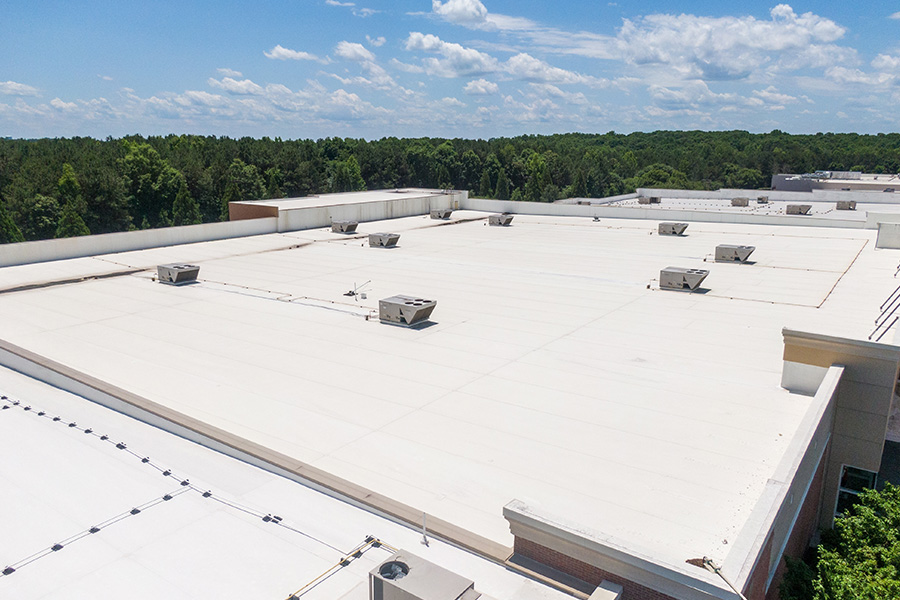
White TPO membranes reflect between 75% and 85% of sunlight. This reflective quality makes a significant difference in roof temperature. For instance, on a 90°F day, white TPO roofs typically reach about 120°F, while black EPDM roofs can hit 170°F. This lower surface temperature reduces the strain on HVAC systems.
Buildings with white TPO roofing in warmer climates often see a 15% to 25% drop in cooling costs. According to the U.S. Environmental Protection Agency, a cool roof can save up to $0.50 per square foot annually on energy expenses. For a 2,000-square-foot roof, that’s about $1,000 in yearly savings. Plus, with less heat entering the building, HVAC systems experience reduced wear and tear, which extends their lifespan and lowers replacement costs. These savings highlight the practicality and durability of white TPO as a roofing choice.
TPO Roofing Lifespan and Durability
One of TPO roofing’s standout features is its longevity, which pairs well with its energy-saving benefits. TPO roofs typically last 20 to 30 years with minimal upkeep. Their durability comes from a polyester reinforcement or fabric mesh core, which provides excellent tensile strength and resistance to tears and impacts. This durability is crucial for maintaining integrity after severe weather, though you should still know when to call a professional if you suspect storm damage. In fact, TPO offers up to three times the puncture resistance of traditional EPDM.

TPO membranes are installed using hot-air welding, which fuses the sheets into a single, watertight layer. This process creates seams that are often stronger than the membrane itself:
"A properly welded TPO seam is actually stronger than the membrane itself." – Premier Group
Additionally, TPO is highly resistant to bacteria, algae, fungus, and various chemicals like oils and animal fats. The cooler surface temperature – often 50°F to 60°F lower than black roofing – also helps minimize heat-related degradation, ensuring a longer-lasting roof.
Environmental and Cost Savings
White TPO membranes are fully recyclable, meaning old roofing materials can avoid landfills and be reused instead. This aligns well with efforts to meet LEED standards and other green building initiatives. Many white TPO products also meet or exceed ENERGY STAR specifications for solar reflectance, further emphasizing their efficiency.

By reflecting solar heat, white TPO not only reduces cooling costs but also helps lower local temperatures and greenhouse gas emissions. These eco-friendly benefits, combined with energy savings, make TPO roofing a smart choice for those looking to balance performance with environmental responsibility.
While the upfront cost of white TPO might be higher, the energy savings often pay off within 5 to 7 years in hotter regions. After that, every dollar saved on cooling goes straight to your bottom line. Pro-Tech Roofing offers free inspections and transparent pricing at 1107 N 105th E Ave, Tulsa, OK, so you can calculate your potential costs and savings. This combination of benefits makes switching to white TPO a sound investment for long-term performance and sustainability.
How to Convert Your Roof with Pro-Tech Roofing
Roof Inspection and Preparation
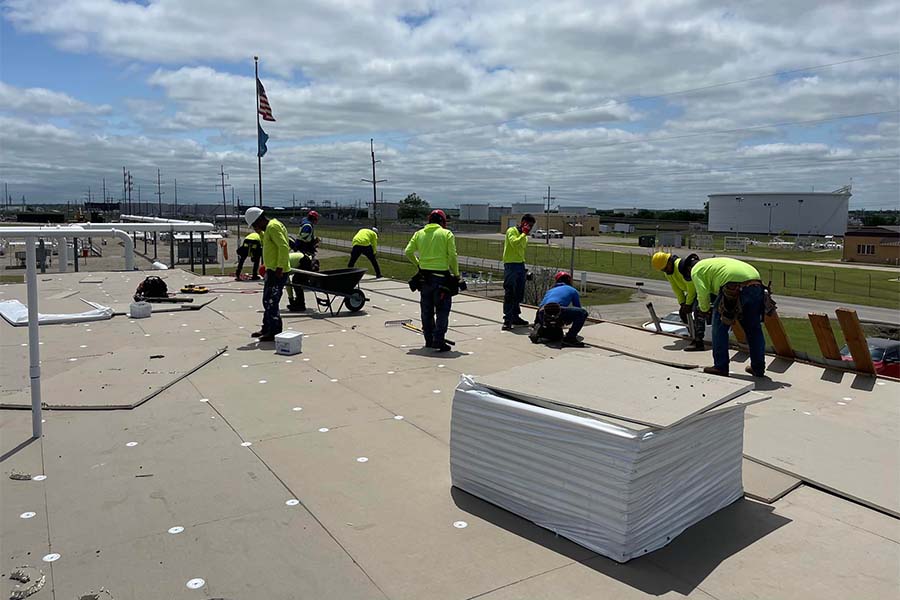
The process of transforming your black EPDM roof into a white TPO roof begins with a detailed inspection. Pro-Tech Roofing carefully evaluates the membrane for cracks, holes, brittleness, or curling seams that indicate adhesion issues. They also assess how your current EPDM is attached – whether fully adhered or mechanically fastened – to determine the most effective approach for removal or overlay.

Detecting moisture is a crucial step. Using infrared technology or core sampling, technicians identify any saturated insulation beneath the membrane. If moisture is found, it’s removed and replaced to ensure a stable base for the new TPO installation. Additionally, the roof deck is checked for structural soundness, while interior ceilings are examined for signs of leaks or water stains.
If your roof already has multiple layers or extensive moisture damage, a full tear-off is required. Otherwise, the existing EPDM can be power-washed to remove dirt and debris. Since directly installing TPO over EPDM can void warranties due to chemical incompatibilities, a cover board – commonly polyisocyanurate – is added to create a smooth, compatible surface for the TPO membrane. Once the roof is fully prepped, the white TPO installation can begin.
White TPO Installation Process
After preparing the roof with clean and smooth insulation boards, which also improve the R-value, the TPO membrane is secured. Pro-Tech Roofing offers membranes in various thicknesses – 45-, 60-, or 90-mil – and these are attached using either mechanical fasteners with plates and screws or high-strength adhesives for a durable bond.
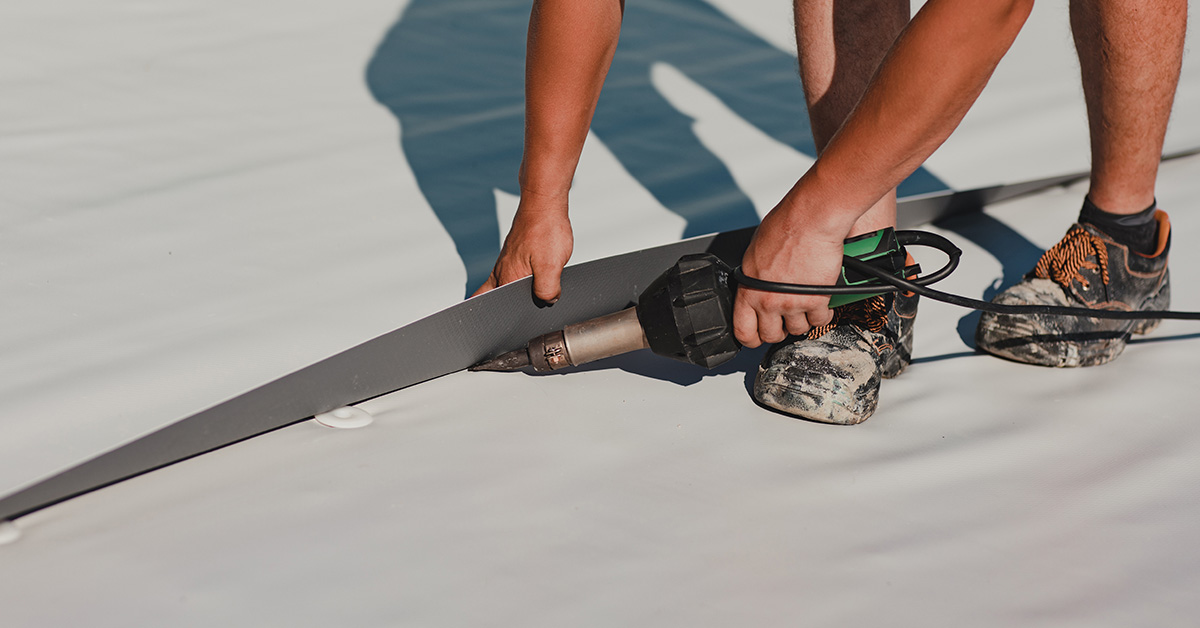
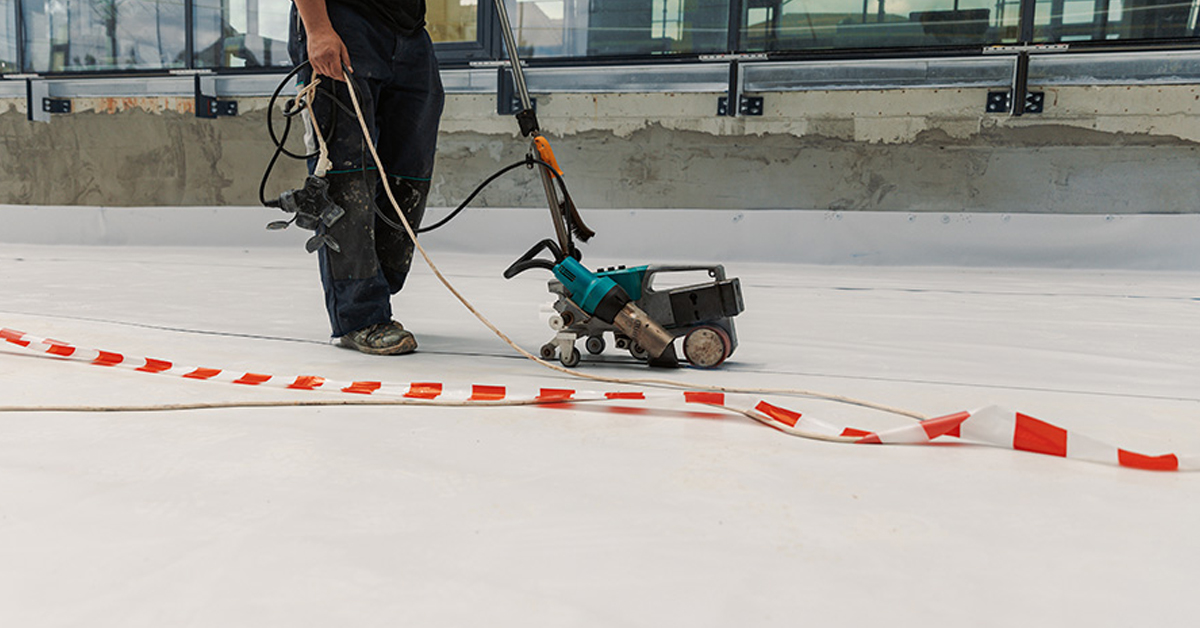
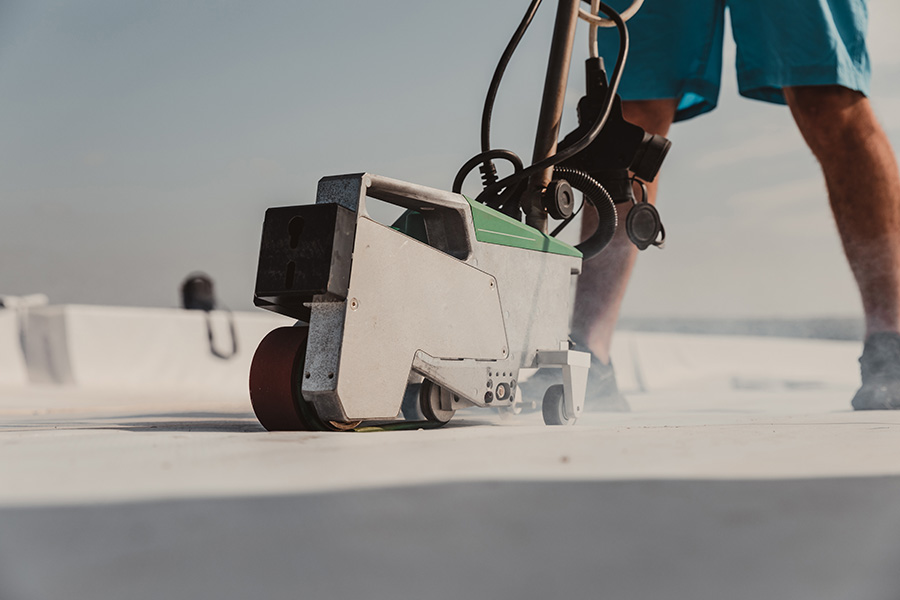
A standout feature of TPO installation is the heat-welded seams. This technique enhances both energy efficiency and durability. Using hot-air welders set between 900°F and 1,100°F, technicians fuse the membrane sheets together. This process creates a molecular bond that surpasses the strength of the membrane itself. As Richard McCain, Owner of First State Roofing & Exteriors Co., notes:
"TPO’s heat-welded seams create a single, fused layer that is strong and leak-resistant."
Every seam undergoes testing to confirm proper fusion and weld strength. Once the membrane is secured and seams are welded, the focus shifts to sealing all vulnerable areas for complete waterproofing.
Flashing and Edge Sealing
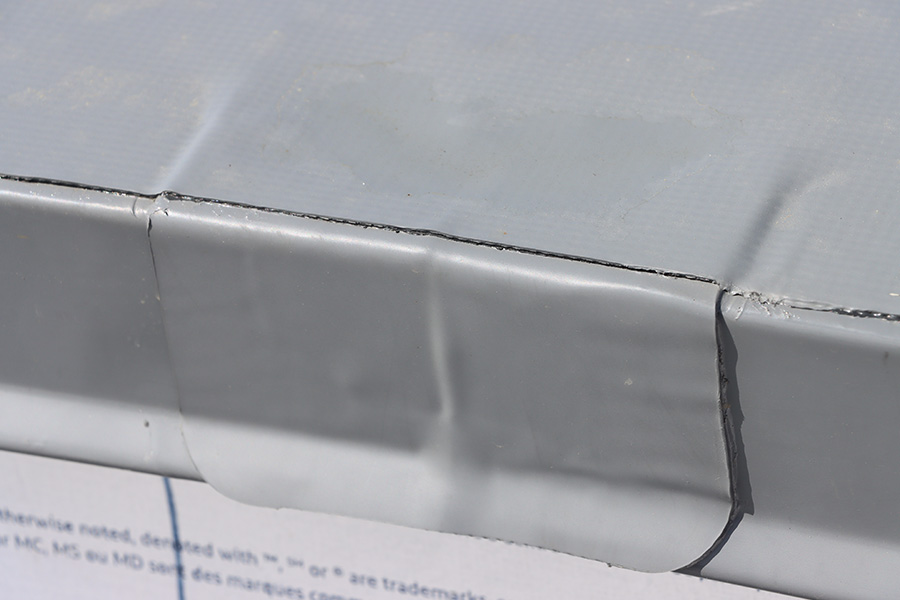
The final step addresses potential weak points like pipe boots, vents, HVAC units, and roof edges. These areas are hand-welded, and metal flashings are installed to prevent leaks. Edge terminations are carefully sealed, ensuring a fully waterproof system.

Since seam quality is critical to the performance of a TPO roof, Pro-Tech Roofing employs automatic hot-air welders for long seams and skilled hand-welding for intricate corners and penetrations. This thorough sealing process provides decades of reliable, energy-efficient protection. To schedule a free inspection and discuss your roof conversion, visit Pro-Tech Roofing at 1107 N 105th E Ave, Tulsa, OK.
TPO Roof Installation – Secrets NO ONE Tells You! – Rankin County, MS
EPDM to TPO Conversion Costs
Breaking down the costs of converting from EPDM to TPO is essential to understanding the potential energy savings. Here’s a detailed look at the key cost components and their connection to the energy efficiency benefits of TPO roofing.
TPO Material Costs
Material costs typically account for 60% to 75% of the total project budget. The price of TPO membranes ranges from $3.50 to $6.00 per square foot, depending on thickness. Thicker membranes offer better puncture resistance but come with higher costs.
Insulation is another major factor, representing up to 50% of material expenses. Polyisocyanurate (PolyISO) insulation costs $1.60 to $2.40 per square foot, while expanded polystyrene (EPS) insulation ranges from $3.00 to $4.20. Adhesives, priced at around $80 per 3-gallon bucket, cover approximately 150 square feet. If your roof needs better drainage, tapered insulation adds $2.50 to $3.50 per square foot.
For smaller roofs under 1,000 square feet, expect a "small job penalty", with per-square-foot costs up to 50% higher due to fixed mobilization and equipment expenses. On the other hand, larger commercial roofs over 25,000 square feet may see cost reductions of about 5% or more per square foot.
Labor and Additional Expenses
Labor costs typically make up 25% to 45% of the total project cost. Rates range from $2.70 to $4.80 per square foot. Complex roof features like HVAC units, skylights, vents, or parapet walls require extra flashing and manual welding, which can significantly increase labor time and costs.
Tear-off and disposal add another $1.00 to $2.00 per square foot to the overall expense. If damaged plywood decking is uncovered during the removal process, replacing it costs around $150 per sheet, including labor and disposal. Additional fees for building permits, dumpster rentals, and landfill surcharges may also apply.
To avoid unexpected expenses, request a detailed quote that lists all components, including membrane, insulation, decking, labor, and extras like pipe boots or sealants. Be cautious of low bids that might omit critical items, such as cover boards, which could void warranties.
Return on Investment Through Energy Savings
While the upfront costs of TPO roofing may seem substantial, the energy savings can significantly offset these expenses. As mentioned earlier, white TPO roofs reflect 75% to 85% of sunlight, reducing heat transfer compared to black EPDM. For example, on a 90°F day, a white TPO roof reaches about 120°F, while black EPDM can hit 170°F. This difference can lead to 20% to 30% reductions in summer cooling costs.
"The payback period on white rubber roofing is typically 5-7 years in southern states. Your higher upfront cost gets recovered through lower utility bills."
– Fakhir, Lead Installer, Rainy Roofers
For a 10,000-square-foot TPO roof, annual cooling savings can reach $3,000. In one example, a 15,000-square-foot warehouse in Pennsylvania saw a TPO installation costing $90,000 generate $3,000 in annual energy savings. Over 20 years, the total savings of $60,000 more than offset the $15,000 price premium compared to an EPDM system. For larger commercial properties, lifetime energy savings can exceed $200,000 over 25 years.
Additionally, TPO roofs may qualify for LEED certification points and utility rebates, further reducing the financial burden of installation.
For a free inspection, contact Pro-Tech Roofing at 1107 N 105th E Ave, Tulsa, OK.
Why Choose Pro-Tech Roofing for Your TPO Conversion
Commercial and Residential TPO Installation Experience
Pro-Tech Roofing, fully licensed (Oklahoma License #80003685) and commercially endorsed by the State of Oklahoma, brings expertise in single-ply TPO and EPDM systems designed for flat and low-slope roofs. Their portfolio includes a variety of buildings, such as churches, condominiums, retail spaces, warehouses, and office complexes. Whether you’re overseeing a 2,000-square-foot residence or a sprawling 25,000-square-foot commercial property, their team carefully assesses your structure to recommend the best installation method: fully adhered, mechanically attached, or ballasted. This hands-on experience ensures your TPO conversion not only improves energy efficiency but also enhances the overall durability and performance of your roof.
Free Inspections and Transparent Pricing
Pro-Tech Roofing offers free, comprehensive roof inspections to pinpoint key issues like punctures, deteriorated membranes, loose flashing, hail damage, or water pooling. Following the inspection, you’ll receive a detailed, no-obligation quote that itemizes every aspect of the project – membrane, insulation, labor, flashing, and additional materials – so you know exactly what to expect before work begins. It’s a straightforward approach designed to make upgrading to a more energy-efficient roof simple and stress-free.
Trusted by Tulsa Homeowners and Businesses
Pro-Tech Roofing has built a reputation for excellence throughout Northeast Oklahoma, serving areas like Tulsa, Bartlesville, Bixby, Broken Arrow, Jenks, Owasso, Catoosa, Coweta, Claremore, Collinsville, Glenpool, and Sand Springs. Fully insured and certified by top roofing product manufacturers, their team delivers peace of mind to both residential and commercial clients. Their expertise includes heat-welded seams that form a seamless, watertight barrier – offering greater reliability than older EPDM systems that rely on adhesives or taped seams. Ready to get started? Schedule your free inspection by visiting Pro-Tech Roofing at 1107 N 105th E Ave, Tulsa, OK.
FAQs
Can TPO be installed over my existing EPDM roof?
Yes, TPO roofing can be installed directly over an existing EPDM roof. This method is often used during roof restoration or replacement projects. It provides a convenient way to improve both energy efficiency and the roof’s durability without the need to completely tear off the old roofing material.
Will a white TPO roof still save energy in winter?
Yes, a white TPO roof can help save energy even during winter. While its reflective surface works best at cutting cooling costs in warmer months, it still offers year-round benefits, particularly in sunny areas. Plus, its durability and insulating properties play a role in maintaining energy efficiency no matter the season.
How do I know if my roof needs a full tear-off or an overlay?
To choose between a full tear-off and an overlay, start by evaluating your roof’s current condition. If there’s extensive damage, persistent leaks, or structural concerns, a full tear-off is usually the way to go. On the other hand, if the roof is still in solid shape and local regulations permit, an overlay could be an option. Keep in mind, though, that overlays might lead to structural issues or even void existing warranties. The smartest move? Consult a roofing professional to figure out the best solution for your situation.
Related Blog Posts
- Why Your Tulsa Warehouse Metal Roof is Actually a Foundation for a 20-Year TPO Asset
- Stop Painting Your Problems: Why TPO Retrofits Outlast Commercial Roof Coatings in Northeast Oklahoma
- Upgrading Sapulpa’s Main Street: How TPO Retrofits are Saving Local Retailers on Energy
- No More Hot Tar: Transforming Gritty Built-Up Roofs into High-Reflectivity Assets with Fleece-Backed TPO