
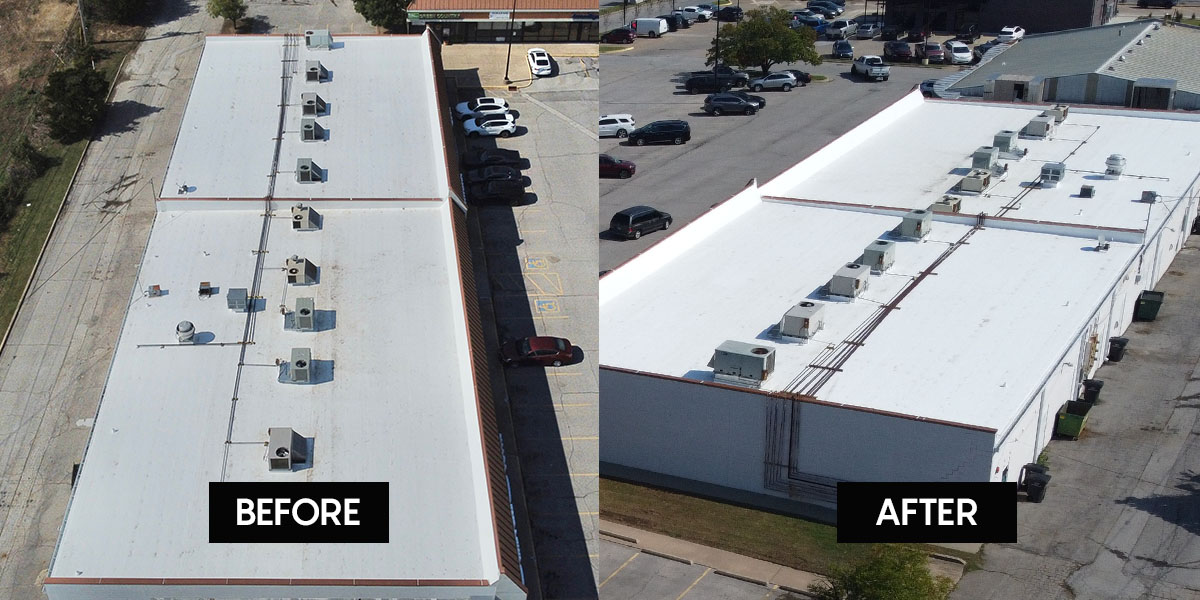
If you own a shop on Sapulpa’s Main Street, you know how brutal Oklahoma summers can be on cooling costs. Here’s the good news: TPO roofing is helping local businesses cut energy bills by 10–30%. Its reflective surface keeps buildings cooler, reduces strain on HVAC systems, and lasts up to 30 years. Plus, TPO roofs are durable enough to handle Oklahoma’s tough weather, from high winds to hailstorms.
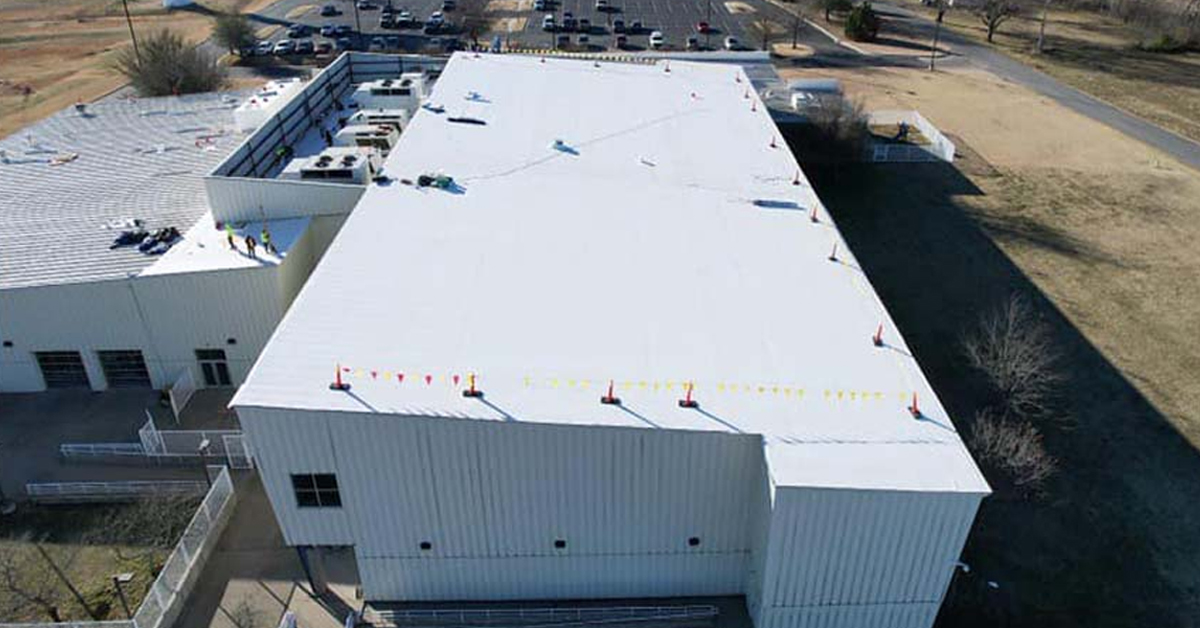
What makes TPO stand out? It’s affordable (about $6–$10 per square foot), recyclable, and often installed over existing roofs, saving time and money. Pro-Tech Roofing offers free inspections to help you decide if TPO is right for your building. With energy savings, lower maintenance, and a watertight seal, TPO is a practical way to upgrade your roof and keep your business cool, efficient, and protected.
TPO Metal Retrofit Roof Installation | Houston TX
Step 1: Getting a Professional Roof Assessment from Pro-Tech Roofing
Before moving forward with a TPO retrofit, it’s crucial to assess your roof’s condition. A detailed roof evaluation ensures your building’s structure can handle a new TPO overlay and helps uncover any hidden issues that might interfere with the retrofit process. This step is essential to ensure your retrofit achieves the energy savings you’re aiming for. Pro-Tech Roofing offers free inspections specifically tailored to help Main Street retailers make well-informed decisions about their roofing needs. Let’s explore what’s included in these inspections and why they’re so important.
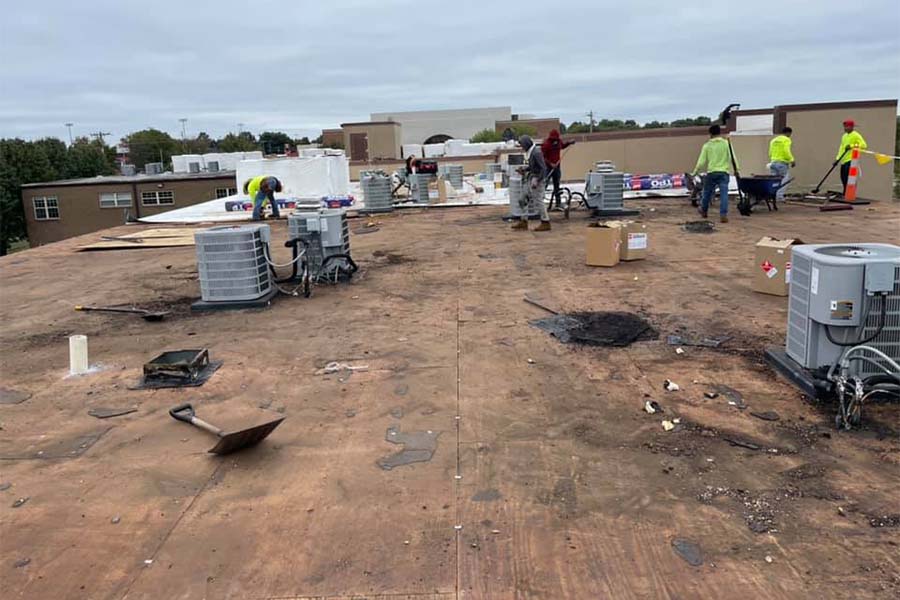
Free Roof Inspections for Main Street Retailers
Pro-Tech Roofing provides free inspections that thoroughly evaluate whether your building is a suitable candidate for a TPO retrofit. During the inspection, the team examines structural integrity and looks for signs of moisture, leaks, or potential insulation damage. They also check drainage patterns to identify areas where water may collect and inspect roof penetrations, such as vents and chimneys, to ensure proper flashing and a watertight seal.
"The process begins with a thorough inspection to ensure the current roof’s structural integrity can support the new overlay." – Pro-Tech Roofing
Another benefit of this evaluation is guidance on insurance claims. If your roof has suffered storm damage, a professional assessment can help determine whether issues like wind or hail damage meet the criteria for filing a successful claim. To schedule your free inspection, visit Pro-Tech Roofing at 1107 N 105th E Ave, Tulsa, OK. This process not only identifies potential problems but also lays the groundwork for spotting common signs that your roof may need a retrofit.
Common Signs Your Roof Needs a Retrofit
Once the inspection is complete, there are several clear indicators that your roof might require a retrofit. Inside your building, look for water intrusion: water stains on ceilings or walls, bubbling paint on drywall, or leaks near electrical outlets. Outside, check for visible damage, such as punctures, tears, cracks, blistering, or loose flashing around vents and chimneys. Ponding water is another red flag, as it points to drainage issues that need to be addressed before installing TPO.
If your energy bills are climbing, it could mean your roof isn’t reflecting heat effectively, which can drive up cooling costs. Older metal roofs that frequently leak are also excellent candidates for TPO retrofits, as they can often be installed directly over the existing surface, eliminating the need for an expensive tear-off. Tackling these issues with a retrofit can lead to lower energy costs and better overall building performance. To stay ahead of problems, schedule annual roof inspections and always check for damage after major storms.
Step 2: Selecting and Installing TPO Materials
After verifying that your roof is ready, the next step is to pick high-quality TPO materials and plan the installation. The type of TPO membrane you choose impacts energy efficiency and the lifespan of your roof. Pro-Tech Roofing prioritizes materials built to handle Oklahoma’s extreme heat and harsh weather, ensuring a smooth transition from inspection to installation.
Choosing ENERGY STAR Certified TPO Materials

TPO membranes are available in various thicknesses – 40-mil, 60-mil, and 80-mil – with thicker membranes offering better resistance to hail, wind, and foot traffic. For small businesses in Sapulpa, 60-mil TPO with heat-welded seams strikes the perfect balance between durability and cost. High-quality TPO membranes consist of a UV-resistant top layer, a polyester mesh core for reinforcement, and a flexible base layer designed to adapt with your building.
Color plays a bigger role than you might expect. White TPO membranes reflect solar heat effectively, which is essential during Oklahoma’s scorching summers. This reflective quality can lower cooling expenses by 10% to 30%, especially for retail and office spaces. Heat-welded seams further enhance performance by creating a watertight, shrink-resistant barrier that’s much stronger than glued or taped seams. To boost energy efficiency even further, Pro-Tech Roofing pairs TPO membranes with polyisocyanurate insulation boards, which improve thermal resistance and drainage.
Preparing Your Building for Installation
Preparation methods vary depending on whether the project involves a retrofit or a full roof replacement. For retrofits, the existing metal roof surface must be thoroughly cleaned to remove dirt, debris, and old adhesives, ensuring a strong bond for the new membrane.
"TPO requires a solid substrate for support, which may include an insulation system engineered to promote water flow, improve drainage and increase energy efficiency of the building." – Pro-Tech Roofing
In cases where a full replacement is required, Pro-Tech Roofing handles every step, from removing the old roof to installing new underlayment that complies with local codes. They also address structural issues like water pooling and replace any damaged decking before laying down the TPO membrane. This meticulous preparation guarantees that your new roof will perform as intended from the start.
Reducing Business Disruptions During Installation
Once materials are selected and the site is prepared, the installation process is designed to minimize interruptions to your business. One key advantage of TPO retrofits is their speed. Since the new membrane is installed directly over your existing roof, there’s no need for noisy demolition or large amounts of debris removal. This efficient process keeps downtime to a minimum, allowing your business to stay open.
"By choosing a TPO retrofit, businesses can maintain their operational schedules with minimal interruption, allowing them to continue serving their clients and maintaining workflow efficiency." – Pro-Tech Roofing
Pro-Tech Roofing works closely with business owners to schedule installations during off-peak hours or weekends when customer traffic is lighter. The heat-welding process used for seams is quick and clean, forming an instant watertight bond without the mess of adhesives. After the installation, the crew ensures the area is spotless, using magnetic tools to pick up nails and clearing away debris to keep your storefront and parking lot safe. With costs averaging $6 to $10 per square foot, TPO retrofits provide energy savings without the extended downtime associated with full roof replacements. To explore scheduling options that fit your business needs, reach out to Pro-Tech Roofing at 1107 N 105th E Ave, Tulsa, OK.
sbb-itb-66ccccd
Step 3: Tracking Energy Savings and Maintaining Your TPO Roof
Once your TPO roof is installed, it’s important to monitor energy savings and maintain its efficiency. Keeping track of the results helps you see the return on your investment, while regular upkeep ensures your roof continues performing at its best. Pro-Tech Roofing offers tools to measure savings and services to maintain your roof over the years.
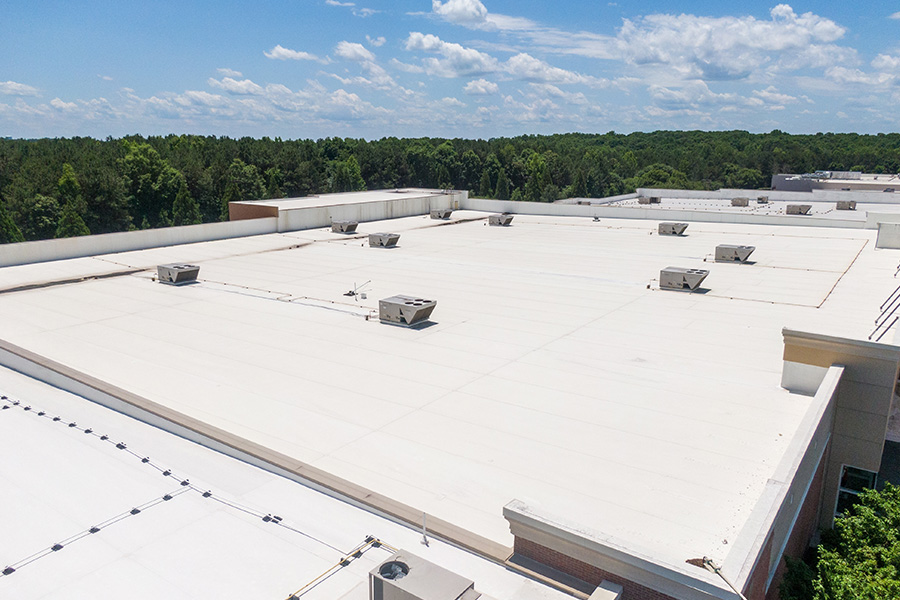
How to Measure Energy Savings After Your Retrofit
To gauge the impact of your retrofit, compare your energy usage during the same months before and after installation. Typically, TPO retrofits can cut cooling costs by 10% to 30% – an improvement you can verify through your utility bills. For instance, a business spending $800 monthly on electricity might save between $80 and $240 each month, which could add up to $2,880 annually.
For more precise insights, consider installing smart meters or real-time monitoring devices on your HVAC system. These tools track energy consumption at the equipment level, offering a clearer view of reduced cooling loads compared to overall utility bills. Software like RETScreen Expert can also simulate audits, calculate savings on fuel costs, and estimate your payback period. A 2023 study in the MDPI Sustainability Journal by Abdulhameed Babatunde Owolabi and Dongjun Suh highlighted how a low-rise building in Daegu, South Korea, achieved energy savings of 2,098 kWh in heating and 6,307 kWh in cooling after a building envelope improvement. This translated to $306 in fuel savings and a payback period of just 1.6 years.
You might also notice your HVAC system running less often, especially during hot afternoons. This happens because a clean TPO roof reflects UV rays instead of absorbing them, reducing cooling demands. However, maintaining this reflectivity is key – dirt and algae buildup can diminish solar reflectance. Regular cleaning is essential to keep your energy savings intact [15, 16]. Monitoring these changes will confirm your retrofit’s success and highlight the importance of ongoing maintenance.
Pro-Tech Roofing’s Warranty and Maintenance Services
To sustain energy savings, regular maintenance is just as critical as accurate tracking. Pro-Tech Roofing backs its TPO installations with robust warranty coverage and preventative maintenance plans designed to extend your roof’s lifespan. With proper care, TPO membranes can last 25 years or more. Pro-Tech recommends professional inspections at least once a year and after severe weather events like hail or strong winds.
"Ideally, your roof should be professionally inspected at least annually and directly after any major weather event." – Pro-Tech Roofing
During these inspections, Pro-Tech’s team looks for issues like punctures, tears, loose flashing, seam separations, and pooling water. They also clear debris that can block drainage systems and damage the TPO surface. Maintenance includes cleaning and sealing gutters and drains to prevent water buildup, which can affect thermal performance. Small leaks or punctures should be repaired immediately to prevent further damage, and high-traffic areas are checked for wear caused by foot traffic or falling debris [2, 18].
As a licensed Oklahoma roofing company with a Commercial Endorsement (#80003685), Pro-Tech Roofing has been serving the Sapulpa area since 2003. They are fully insured, hold a BBB A+ rating, and boast a 4.7/5 star rating on Google from 51 reviews [2, 8]. Their preventative maintenance plans are designed to ensure your TPO roof continues to deliver energy savings year after year. To schedule an annual inspection or explore warranty options, reach out to Pro-Tech Roofing at 1107 N 105th E Ave, Tulsa, OK.
Why TPO Roofing Makes Sense for Sapulpa‘s Main Street
For retailers along Sapulpa’s Main Street, TPO roofing offers a standout mix of energy efficiency, durability, and long-term cost savings. Its reflective white surface helps keep buildings cooler during Oklahoma’s sweltering summers, often cutting cooling costs by 10–30%. On top of that, TPO’s heat-welded seams form a watertight barrier that can handle wind gusts over 100 mph, a critical feature for enduring Oklahoma’s unpredictable storms.
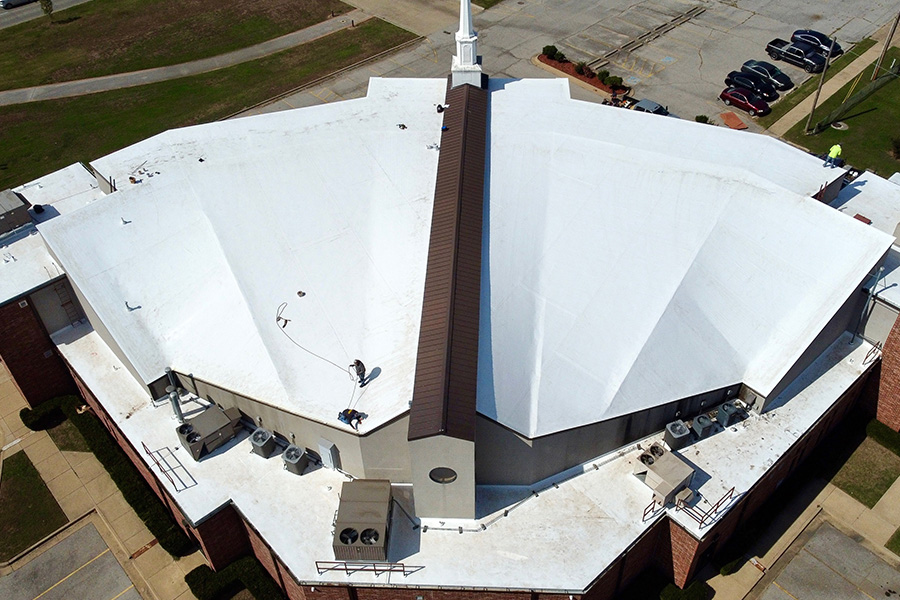
TPO is also a smart financial choice due to its low maintenance needs and impressive return on investment. It’s 100% recyclable and helps mitigate the urban heat island effect, making it an eco-conscious option for downtown business owners. Its affordability and reliable performance make it a practical choice for commercial properties.
TPO vs Other Roofing Options: A Comparison
Here’s how TPO stacks up against other common roofing materials:
| Feature | TPO Roofing | EPDM (Rubber) | Asphalt Systems |
|---|---|---|---|
| Average Cost (per sq. ft.) | $6 – $10 | $5 – $9 | Varies (typically lower upfront) |
| Lifespan | 20 – 30 years | 25 – 40 years | 15 – 20 years |
| Energy Efficiency | High (reflective surface) | Low (absorbs heat) | Low (retains heat) |
| Seam Integrity | Heat-welded (watertight) | Adhesive/tape (prone to failure) | Multiple layers/seams |
| Best For | Hot climates like Oklahoma | Cold climates | Budget-conscious projects |
While EPDM may last longer in some cases, its dark surface absorbs heat, making it less suitable for Sapulpa’s warm climate. TPO’s heat-welded seams provide exceptional strength and reliability, whereas EPDM’s adhesive-based seams can degrade over time.
"TPO roofing system usually wins for energy savings in hot climates." – Shoemaker Roofing
Increasing Property Value and Meeting Sustainability Goals
Beyond energy savings, TPO roofing enhances property value by aligning with sustainability goals. A TPO retrofit modernizes your building’s exterior and reduces long-term operational costs. Energy-efficient roofs are particularly appealing to tenants and buyers looking to lower utility expenses.
TPO also contributes to green building standards like LEED certification. Its cool surface optimizes rooftop solar panel performance, further boosting energy efficiency. If you’re considering a TPO upgrade for your Main Street property, reach out to Pro-Tech Roofing at 1107 N 105th E Ave, Tulsa, OK to learn more. With these benefits, TPO stands out as a top-tier choice for energy-efficient improvements in Sapulpa.
FAQs
Is my current roof a good candidate for a TPO retrofit?
If you’ve got an older metal roof that’s prone to leaks, it might be worth considering a TPO retrofit. This option offers improved energy efficiency and durability without the hassle of tearing off your existing roof.
To ensure your roof is a good fit, it’s crucial to have a professional inspect its structural condition. If it meets the requirements, TPO can help by reflecting sunlight and minimizing heat absorption. This not only cuts down on cooling costs but also helps extend the lifespan of your roof.
How long does a TPO retrofit take, and will my store stay open?
A TPO retrofit can usually be completed in just a few days. With careful planning and the right safety precautions, your store can often stay open throughout the process, keeping interruptions to your business operations to a minimum.
What maintenance keeps a TPO roof energy-efficient year after year?
To keep your TPO roof working at its best, make sure to inspect it regularly. Clear away any debris, check the seams and flashings for wear or damage, and confirm that the drainage system is functioning properly. These straightforward maintenance steps can go a long way in preserving energy efficiency and extending the roof’s lifespan.
Related Blog Posts
- Choosing the Right Residential Roofing Style for Tulsa Architectural Trends
- Why Your Tulsa Warehouse Metal Roof is Actually a Foundation for a 20-Year TPO Asset
- Stop Painting Your Problems: Why TPO Retrofits Outlast Commercial Roof Coatings in Northeast Oklahoma
- The Membrane-on-Membrane Advantage: How Broken Arrow Property Managers are Skipping the Dumpster Fees