
When hail hits, the damage to your roof isn’t always obvious right away. After the May 8, 2026 hailstorm in Northeast Oklahoma, many homeowners assumed their roofs were fine because they couldn’t see visible damage from the ground. But here’s the problem: hail damage often hides beneath the surface, only to cause leaks and costly repairs weeks or months later. By July, Oklahoma’s intense summer heat and rain can turn minor issues into serious problems like cracked shingles, water intrusion, and even mold.
If you live in the Tulsa area and haven’t had your roof inspected yet, now’s the time. Hail damage can worsen quickly, and most insurance policies require claims to be filed within 12 months. A professional inspection can help spot hidden issues, document the damage, and protect your home before it’s too late.
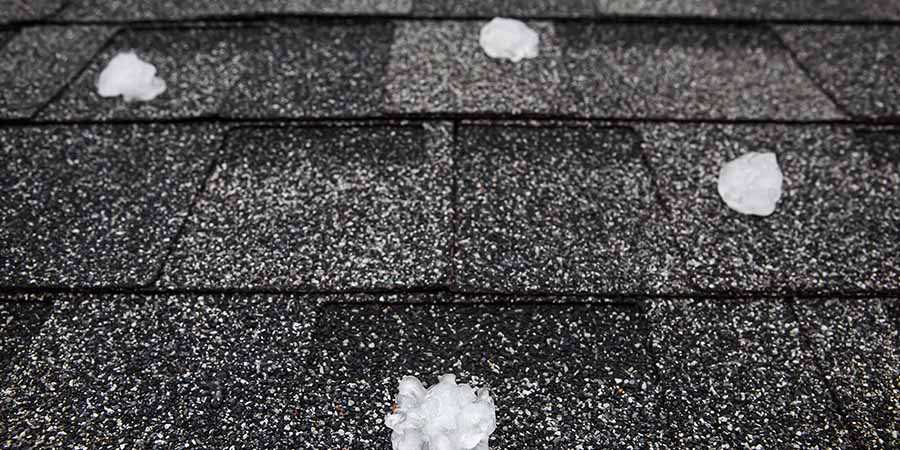
Roof Inspection for Hail and Wind Damage Training Video
Why Hail Damage Is Easy to Miss at First
It’s common for homeowners to check their roof after a storm and assume everything is fine when no obvious damage is visible. However, hail damage often hides in plain sight, only to reveal itself later when repairs become unavoidable.
How Hail Damage Stays Hidden
Hail can bruise the asphalt-fiberglass mat of a shingle without breaking through it. This creates soft depressions that you can’t see from the ground. These dents disrupt the roof’s ability to shed water effectively. Another issue is the loss of mineral granules, which are crucial for protecting shingles from UV rays. Without them, the asphalt layer underneath heats up, becomes brittle, and eventually cracks over time.
"Once those granules are gone, the UV exposure accelerates. The shingle ages faster, becomes brittle, and starts to leak weeks or months after the storm that caused the original damage." – Tier-One Roofing
The damage doesn’t appear immediately. For example, the effects of a May 8 storm might not show until the summer heat and rain expose the weakened shingles. Since these changes happen internally, they’re easy to miss unless you’re inspecting the roof up close.
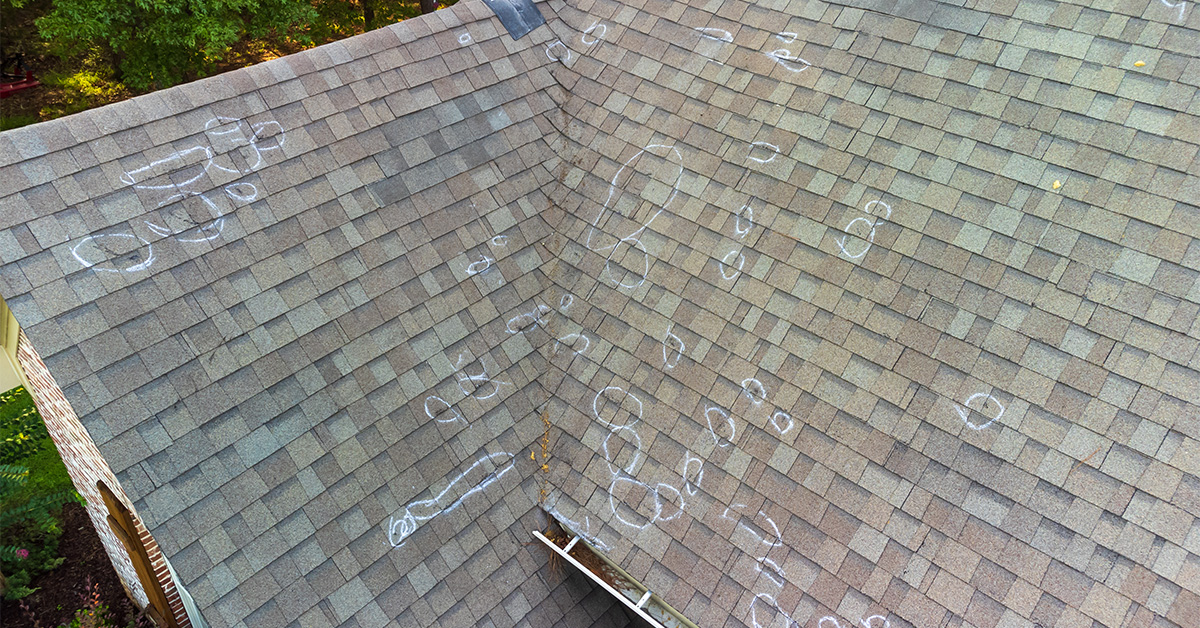
Why Ground-Level Inspections Aren’t Enough
Checking your roof from the driveway might seem like a good idea, but it’s not reliable. The angle of the roof, glare from the sun, and elevation can obscure critical impact zones. More importantly, bruising to the shingle’s mat can only be detected by physically pressing on the surface during a close inspection.
"It’s similar to a bruise under skin – just because you can’t see it immediately doesn’t mean it’s not there." – RC Roofing
Studies show that shingles as old as 11 years are damaged 50% of the time by 1-inch hailstones. This means older roofs are especially vulnerable, and a quick look from the ground won’t reveal their true condition.
There’s also an important time constraint to consider: in Oklahoma, insurance policies typically require claims to be filed within 12 months. Since hail damage often takes weeks or months to become visible, skipping a professional inspection could mean missing this critical deadline. By the time leaks start, the damage may be harder to document, making claims much more complicated.

Signs of Hail Damage You Can Check Without Getting on the Roof
Spotting hail damage doesn’t always mean climbing up to your roof. By simply walking around your property, you can identify key indicators that might suggest your roof needs a closer look from a professional.
What to Look for in Your Gutters
Start by examining the base of your downspouts. If you notice dark, sand-like grit gathered there or near splash blocks, those are likely shingle granules. These granules, which protect asphalt shingles from UV rays and water, often get knocked loose by hail. Rain then carries them into your gutters and out through the downspouts.
"A large accumulation of granules in the downspout or at the base of a downspout extension after a storm is one of the clearest signs that shingles took significant hits." – Teague Roofing Plus
Next, check your gutters themselves for dents or dimples. Aluminum gutters, being a soft metal, clearly show impact marks from hail, often making them easier to assess than shingles.
Dents on Metal Surfaces and Nearby Structures
Hail damage isn’t limited to gutters. Walk around your property and inspect other metal surfaces like downspouts, window trim, fascia boards, and the fins on your outdoor AC condenser. Flattened or crushed fins, for example, can indicate hailstones struck with enough force to potentially harm your roof as well.
"If soft metals around your property show a clear pattern of hail dents, the hailstones were large enough and fell with enough force to damage roofing materials too." – Gates Enterprises
Don’t forget to check your window screens for punctures or warped mesh, and look at your mailbox or metal fence posts for round impact marks. These signs can give you a sense of how severe the storm was. If you find multiple dents on soft metal surfaces, it’s a strong indicator of significant hail impact. Be sure to take date-stamped photos of the damage – this documentation can be crucial if you need to file an insurance claim.
"Dented downspouts confirm that the hail was hitting surfaces at the level of your roofline, which means your shingles, flashing, and vents were exposed to the same impacts." – Gates Enterprises
Even hail as small as 1 inch in diameter (about the size of a quarter) can cause damage to standard asphalt shingles. If your gutters or AC unit show dents, there’s a good chance your roof has taken a hit too. Catching these signs early can help you act quickly to avoid further issues. If you’re in the Tulsa area, our team is ready to assist – visit us at 1107 N 105th E Ave, Tulsa, OK to schedule an inspection.
sbb-itb-66ccccd
How Roof Damage Gets Worse Between May and July
The jump from a May hailstorm to a July leak isn’t random – it’s a predictable chain of events. What starts as minor granule loss quietly escalates into significant issues, thanks to Oklahoma’s summer weather.
How Heat, Rain, and Wind Make Small Problems Bigger
Hailstorms strip granules off shingles, removing their UV protection and exposing the asphalt underneath. Under Oklahoma’s intense summer heat, this exposed asphalt becomes brittle and prone to cracking. Hail also causes micro-fractures in the fiberglass mat – damage that’s invisible at first. Rainwater seeps into these fractures, eventually reaching the roof deck.
Wind adds to the trouble. Hail impacts can break the self-sealing adhesive strips that hold shingle layers together. Once those strips fail, strong winds can lift or even tear shingles away entirely. What starts as a manageable repair can quickly spiral into a major issue.
| Damage Type | What Happens in May | What Develops by July |
|---|---|---|
| Granule Loss | Bare asphalt spots appear | UV rays cause brittleness; cracks develop |
| Mat Fracturing | Invisible internal bruising | Water reaches underlayment and roof deck |
| Seal Strip Break | Adhesive bond weakens | Shingles lift or blow off in later storms |
This progression highlights why delaying repairs can turn small issues into costly problems. Ignoring early damage increases the risk of interior damage, making a professional inspection sooner rather than later critical.
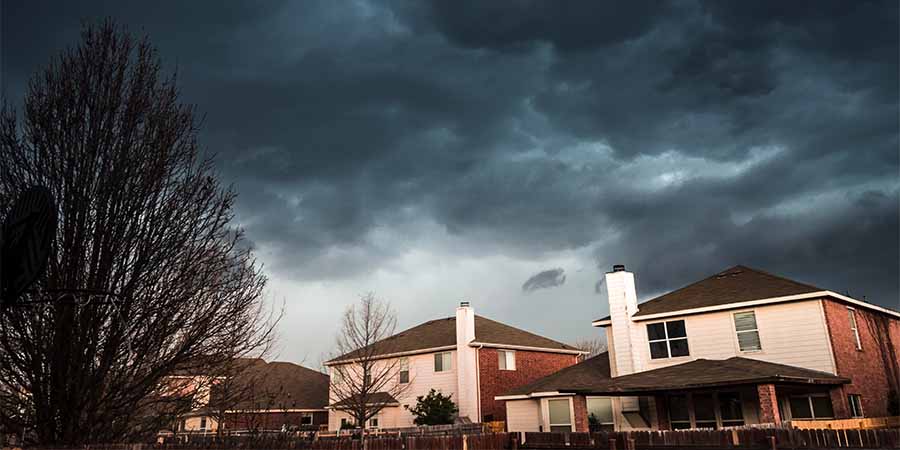
What Happens When You Wait Too Long to Act
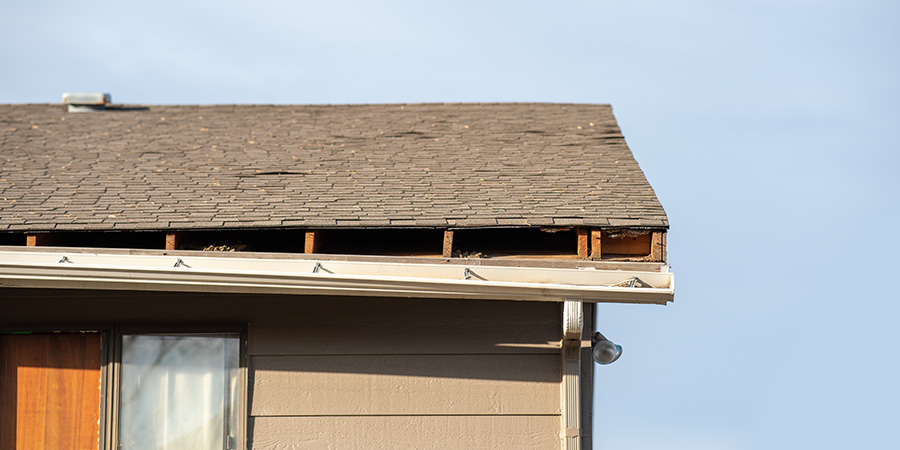
Waiting too long compounds the damage. The roof’s underlayment serves as a temporary barrier, but prolonged exposure to heat and rain wears it down. By July, this secondary layer often fails, allowing water to reach the wood underneath. Once that happens, rot and mold can develop in your attic before you even notice a ceiling stain.
"In Oklahoma’s humid summers, minor granule loss can escalate into interior ceiling leaks within weeks." – Roof One
The financial impact climbs just as quickly. A simple shingle repair costing $1,500 to $4,000 can balloon into a full replacement, ranging from $8,000 to over $15,000, once water damage spreads to the deck and interior. Adding to the urgency, most Oklahoma insurance policies require claims to be filed within 12 months of the storm date. If you wait until a leak appears and try to trace it back to May 8, your insurer might classify the damage as wear and tear, denying your claim. Acting now, while the damage is still fresh and documentable, is the smartest move you can make.
Why a Professional Roof Inspection Matters After a Hail Storm
Looking at your roof from the driveway can be deceiving. While everything might seem fine, hidden damage can lurk beneath the surface – damage that could lead to leaks or other costly problems down the road. By the time those issues become visible, they’ve likely been developing for years. That’s why a thorough, professional roof inspection is so important after a hailstorm.
"The roof that ‘looks fine from the driveway’ after an Oklahoma hailstorm is often the same roof that’s leaking in three years, voided its manufacturer warranty, and missed the insurance claim window." – RainTech Roofing
What a Documented Inspection Covers
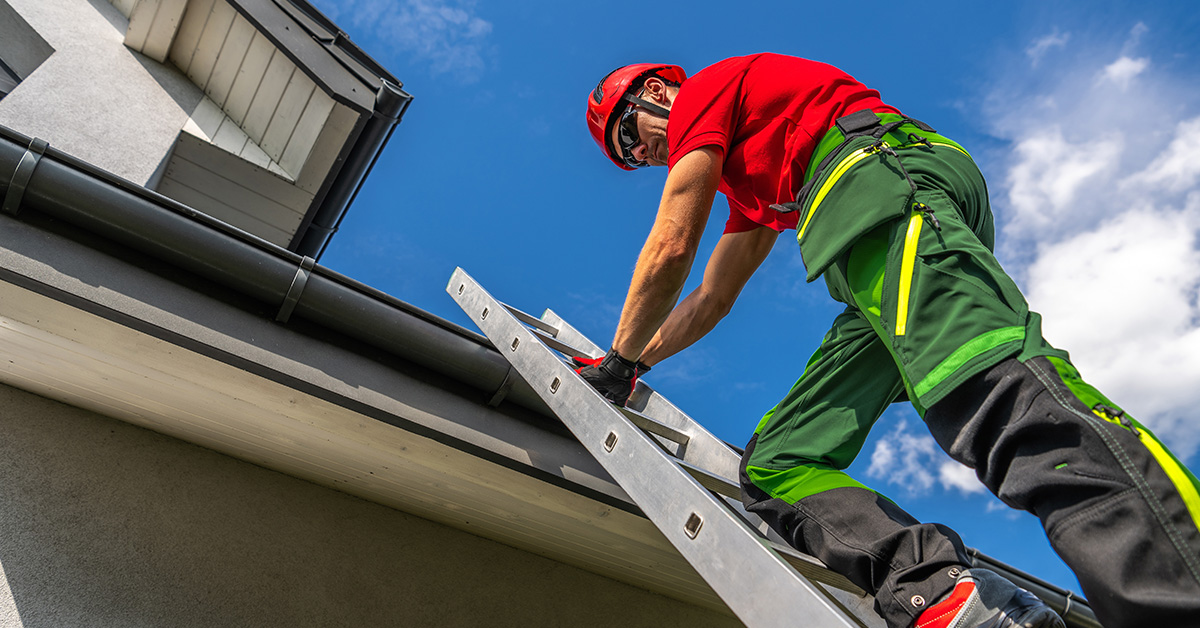
A professional roof inspection isn’t just about spotting visible damage. Licensed inspectors go deeper, checking each shingle for soft spots or dimpling that might indicate hidden issues. They also examine the attic for signs of water intrusion, like damp insulation or musty odors. To ensure accuracy, they provide a timestamped photo report, which is critical for documenting the condition of your roof immediately after the storm.
This documentation isn’t just for peace of mind – it’s a safeguard. It creates a clear date-of-loss record, which can protect you if your insurer later tries to classify storm damage as "pre-existing" or "normal wear and tear." Under Oklahoma law, insurers must acknowledge a claim within 14 days and either approve or deny it within 30 days if you provide proper documentation. A professional report strengthens your position, especially if you need to challenge a low settlement offer.
"A professional report from a licensed roofer holds significant weight with insurers." – Tier-One Roofing
The good news? Most trusted roofing companies in the Tulsa area offer post-storm inspections at no cost to homeowners. For example, Pro-Tech Roofing provides free inspections and can guide you throughout the entire insurance claim process, from the initial walkthrough to the final documentation. You can visit their office at 1107 N 105th E Ave, Tulsa, OK or schedule an inspection online through their roof inspections page. This thorough documentation can be the foundation of a successful insurance claim.
 Why Local Knowledge Makes a Difference in Oklahoma
Oklahoma’s unpredictable weather demands inspection techniques tailored to the region. Local roofing professionals have the expertise to distinguish storm damage from normal wear and tear. For instance, storm damage often shows as sharp-edged granule loss and impact bruising on wind-facing slopes, while aging creates more uniform wear across the roof.
Local inspectors also understand what Oklahoma insurance adjusters look for. They’ll check soft metals like AC condenser fins, roof vents, and even metal mailboxes for dents – clear indicators of hail damage. This level of detail can be the difference between an approved claim and a denial. Considering Oklahoma averages over 525 hail events annually between 2021 and 2024, working with a local expert isn’t just helpful – it’s essential.
Steps to Take Right Now to Protect Your Roof
The time between May 8 and July is shorter than you think. In Oklahoma, most insurance policies allow only one year from the date of loss to file a claim. Acting quickly to document the storm date and any fresh damage is crucial. These initial steps can help you prevent further deterioration and set up a strong case for your roof.
Book a Free Roof Inspection with Pro-Tech Roofing
Before reaching out to your insurance company, schedule a licensed roof inspection. This process, which usually takes 30 to 60 minutes, helps determine whether the damage is significant enough to justify filing a claim and exceed your deductible. A thorough inspection also provides the documentation you’ll need to support your claim.
Pro-Tech Roofing offers free, licensed inspections throughout the NE Oklahoma metro area, including Tulsa, Claremore, Catoosa, and Oologah. With their BBB A+ rating and extensive local experience, they’re a trusted choice for identifying hidden damage and strengthening your insurance claim. You can schedule your inspection online via their roof inspections page or visit them at 1107 N 105th E Ave, Tulsa, OK.
"A roof inspection can save you thousands in damage caused by roof leaks." – Pro-Tech Roofing
Beyond scheduling an inspection, maintaining your roof regularly is equally important to protect your home.

Keep Up with Roof Maintenance to Avoid Bigger Repairs
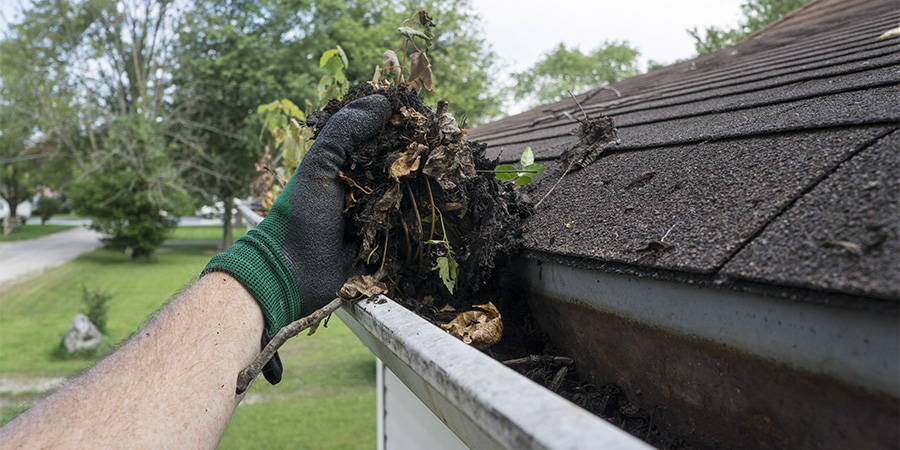
Routine maintenance is key to stopping small problems before they turn into expensive repairs. Start by trimming tree branches that hang over your roof, clearing debris from gutters, and inspecting soft metals like AC condenser fins and gutters after every major storm. These areas often show early signs of damage – if they’re dented, your shingles might be too.
"The earlier you contact a local Oologah roofer, the cheaper your roof repair will be." – Pro-Tech Roofing
Address issues like cracked flashing, exposed nails, and granule loss as soon as possible. Ignoring these problems through another Oklahoma storm season can lead to leaks and structural damage that are far more expensive to fix. Regular inspections – especially after storms like the one on May 8 – are one of the most cost-effective ways to keep your roof in good shape.
FAQs
Will my insurance cover hail damage if leaks show up months later?
Most insurance policies will cover hail damage that shows up months after the storm, provided you file your claim within the policy’s timeframe. In Oklahoma, you usually have up to 24 months to report hidden damage. However, some policies might require you to report visible damage within 30 to 180 days. To reduce the risk of a denied claim, it’s smart to schedule a professional inspection soon after a storm. This helps document any damage and creates a clear timeline for your claim.
How can I tell if my roof was hit without climbing up there?
Inspecting hail damage from the ground can be tricky since some problems, like bruising to the fiberglass mat, aren’t immediately apparent. However, there are a few key signs to watch for. Look for dents in gutters or downspouts, piles of shingle granules, or pockmarks on metal surfaces such as vents or mailboxes. On siding, check for cracks or splatter marks. For areas higher up, like ridge vents or flashing, binoculars can help you spot visible damage or any signs of displacement.
What should I document now before filing a hail claim?
To get ready for a hail damage claim, start by collecting important documents. This includes your policy declarations page, any past repair invoices, and weather reports related to the storm. Next, take high-resolution photos of your home from every angle. Be sure to focus on areas like gutters, vents, flashing, and shingles. For better clarity, place a coin or ruler next to the damage to show scale. Lastly, keep receipts for any temporary fixes, such as tarping, as these can help support your claim.