
A failing commercial roof can cost far more than a repair. It can lead to leaks, damaged inventory, work delays, and repeat expenses. Metal roofing stands out because it often lasts 40 to 70 years, handles high winds, reflects heat, and needs less upkeep and metal roof restoration than many other systems. For many buildings, that means a lower cost over time, even if the upfront price is higher.
| Quick Summary | What it means for you |
|---|---|
| Long life | Metal roofs often last 40 to 70 years |
| Storm resistance | Many systems can handle 140+ mph wind ratings |
| Lower cooling load | Reflective coatings can cut summer cooling costs by 10% to 25% |
| Less upkeep | Maintenance can run about $0.03 to $0.08 per sq. ft. per year |
| Retrofit option | Light weight can help us install over some existing roofs |
| Solar-ready | Standing seam roofs can use clamp-on mounts with no roof penetrations |
If you want the short version, here it is: metal roofing can cost more at the start, but it often gives us longer service life, fewer replacements, lower upkeep, and better storm protection. That mix is why many commercial owners choose it for warehouses, offices, retail buildings, and industrial sites.
A few points matter most:
- It can last two to three times longer than many common roofing systems
- It holds up well in hail, heat, fire, and high wind
- It can lower energy bills with reflective finishes
- It works well with solar and rooftop equipment
- It may reduce long-term roof spending, even with a higher install price
We should still match the system to the building. Standing seam and exposed-fastener roofs serve different budgets and performance goals. And installation matters just as much as the panel itself. If the design, fastening, flashing, or trim is wrong, the roof will not perform the way it should.
For commercial owners, the big takeaway is simple: metal roofing is often about long-term cost control, not just the first invoice.
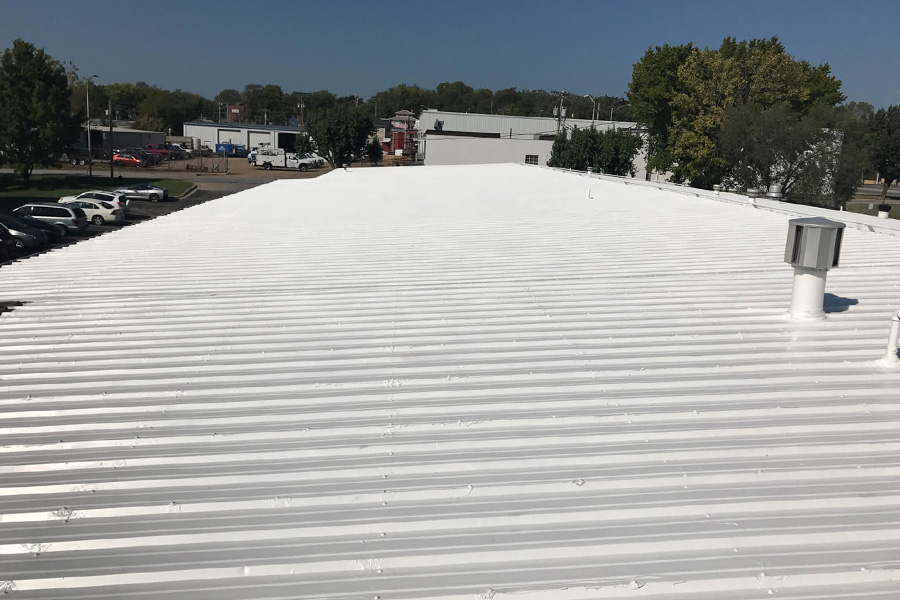
What are the benefits and features of metal roofing?
sbb-itb-66ccccd
Why Metal Roofing Matters for Commercial Buildings
Choosing a commercial roof is a long-term financial decision. We have to look past the upfront price and think about service life, storm protection, code compliance, and day-to-day operating cost. When a roof fails, the damage doesn’t stop at the building. It can interrupt work, ruin inventory, and trigger costly repairs.
That’s why the core question is pretty simple: which commercial roofing systems give us the best return over time?
Metal roofing stands out because it combines long life, strong storm resistance, and lower lifecycle cost. We can cut lifecycle replacement costs, get better protection in harsh weather, and meet current building codes in storm-prone areas. The benefits below show why.
1. Long Service Life
Metal roofing systems usually last 40 to 70 years, which is about two to three times longer than many single-ply membranes.
Over a 50-year building life, that often means zero or one full replacement for metal. By contrast, conventional roofing may need two to four replacement cycles.
That longer service life can cut tear-off and disposal costs. It can also help with resale and appraisal value.
There’s another angle here that matters: asset value. A 10-year-old metal roof with 40+ years of remaining life can be a stronger asset during appraisals, refinancing, and sales.
That kind of lifespan comes down to how well metal stands up to weather and wear, which leads to the next advantage.
2. Outstanding Durability
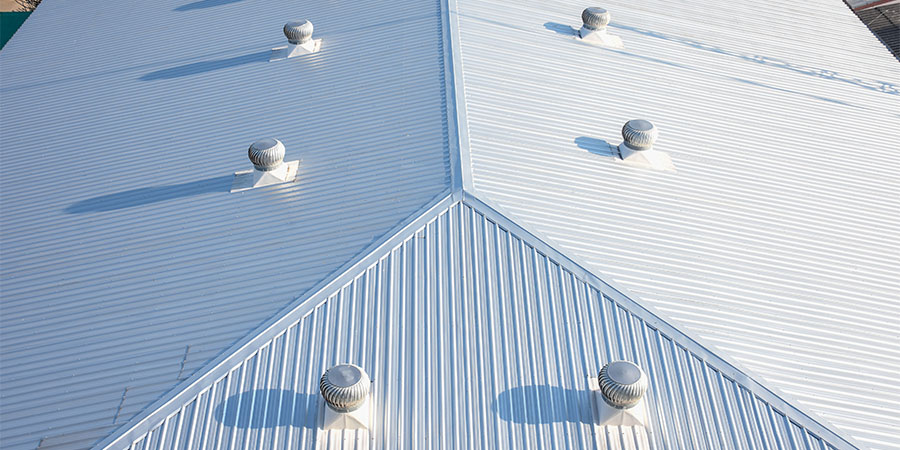
Durability is a big reason metal roofs last so long. In many cases, metal stands up better than common commercial roofing materials.
Commercial metal roofs, especially 24-gauge Galvalume, often earn a Class 4 UL 2218 impact rating, which is the highest available.
Metal also stands up well to the slow wear that cuts short the life of other roofing systems. It doesn’t crack, shrink, rot, or attract pests. PVDF coatings help resist UV fading for decades. And standing seam systems deal well with temperature swings because their concealed floating clips let panels expand and contract freely. That reduces stress on fasteners and lowers the risk of leaks.
This kind of toughness can also mean fewer repairs over time. It matters even more in areas with high winds, making it a top choice for a Tulsa roofing company and its clients.

3. High Wind Resistance
Wind is one of the toughest threats a commercial roof has to handle. A well-engineered standing seam system can hold up against winds above 140 mph.
That said, wind performance isn’t just about thicker metal. It comes down to the rated assembly as a whole. Commercial metal roofing systems are tested under UL 580 and FM Global 4470/4471, and those ratings are measured in PSF of negative pressure. If a system is rated FM 1-180 or higher, it can meet severe hurricane-zone wind loads in the U.S.
Standing seam systems are built to resist uplift, which is a big deal during major wind events. Corners and perimeters need extra attention too, since those parts of the roof take the highest wind loads.
There’s also a money angle here. High-wind ratings may help cut insurance premiums by 5% to 35%. In hurricane-prone areas, we should look for a rated assembly that also meets Miami-Dade County or Florida Building Code requirements.

4. Strong Fire Protection
Metal roofing is non-combustible. It won’t ignite or add fuel to a fire. And most commercial metal roofing systems earn a Class A fire rating under UL 790 or ASTM E108, which is the highest rating available. In many cases, metal reaches that rating without extra fire-retardant coatings.
That can slow the spread of fire and give emergency crews more time to respond. For buildings with inventory, machinery, or rooftop equipment, that extra time can make a big difference.
If you’re trying to qualify for possible savings, ask for paperwork for the full rated assembly, not just separate components. It’s also smart to keep the manufacturer’s test reports and the installing contractor’s certification credentials on file.
In wildfire-prone areas, a Class A metal roof can help protect both the building and rooftop equipment. It also works well alongside energy-saving goals.

5. Energy Efficiency and Cool Roof Performance
Energy savings are a big reason many commercial owners go with metal roofing. Compared with standard roofing, metal roofs reflect more solar heat. And when we add a cool-roof coating, that roof can reflect 60% to 85% of solar radiation, which helps stop heat before it moves into the building.
The difference gets pretty dramatic in summer. On hot days, dark asphalt roofs can absorb 85% to 95% of solar radiation and heat up to 150°F to 170°F. Reflective metal roofs stay about 40°F to 60°F cooler, with peak temperatures around 110°F to 130°F.
PVDF coatings are common on commercial metal roofs because they hold color well and resist fading and chalking over time. Finish color matters too. Lighter colors, such as white, tan, and light gray, tend to perform best, often reaching Solar Reflectance Index (SRI) values of 70 to 90. That high reflectivity is what helps drive lower cooling use.
For commercial buildings in hot climates, those gains can show up fast on utility bills. Cool metal roofing can cut summer cooling costs by 10% to 25%, and some high-performance systems in places like North Texas have reduced cooling expenses by as much as 25% to 40%.
Over the roof’s lifespan, that can add up to $0.65 to $1.11 per square foot in savings. And with the right insulation, a cool metal roof can also help support energy-efficiency tax goals.

6. Low Maintenance Requirements
Lower operating costs don’t stop with energy bills. Metal roofing also tends to be easier to maintain. In most cases, we should plan for two inspections per year, routine gutter cleaning, and periodic checks of fasteners and sealants.
The cost gap is pretty clear. Annual maintenance for commercial metal roofs usually falls between $0.03 and $0.08 per square foot, compared with $0.05 to $0.15 per square foot for membrane systems. That can reduce maintenance spend by 30% to 50%.
A few areas need regular attention:
- Sealants around penetrations
- Fastener condition
- Debris buildup in gutters and valleys
Standing seam systems need less attention because their concealed fasteners remove one common failure point. Exposed-fastener systems need a bit more care. We should expect a fastener replacement program about every 15 to 20 years, since neoprene washers break down over time.
The upside is simple: fewer surprise repairs and steadier upkeep costs.
Low upkeep also pairs with another advantage: metal roofing is lightweight.
7. Lightweight Structural Advantage
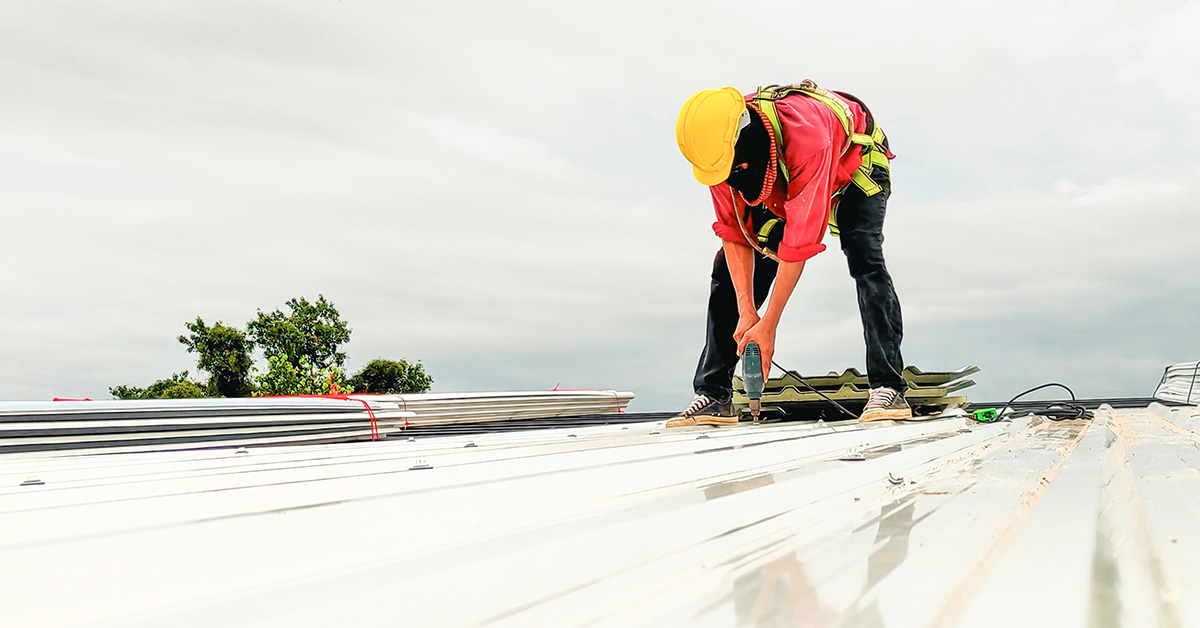
Metal also puts much less load on the building. And in commercial roofing, weight matters a lot.
A standard 26-gauge steel panel weighs only 0.85 pounds per square foot (PSF), while a 24-gauge panel weighs just 1.08 PSF. Built-up roofing (BUR), by contrast, can reach 6.0 PSF. That’s a big gap, and it can change what works on a roof.
Because metal is lighter, retrofit installation often becomes an option. We can install a metal system right over an existing roof with a sub-framing assembly, which cuts down on disruption to day-to-day operations. In most cases, a retrofit system adds only 1.5 to 3.0 PSF of structural load, and many commercial steel structures can support that without major structural changes.
That lighter setup can also cut demolition costs. On a 30,000 sq. ft. building, avoiding a tear-off can save $45,000 to $90,000 in labor and disposal fees alone.
Before moving ahead with a retrofit, have a licensed engineer confirm that the structure and local code limits allow it.
That lower material demand also leads into the next benefit: recyclability.

8. Sustainability and Recyclability
That lighter structure can also mean a lower footprint over time. Metal roofing helps cut waste across the full life of the roof. Steel and aluminum panels usually contain 25% to 95% recycled content.
At the end of its service life, metal roofing is 100% recyclable, and the scrap value can help offset removal costs. Because metal roofs often last 40 to 70+ years, they can also cut down on the repeat tear-off and disposal cycle that fills landfills. For context, about 20 billion pounds of asphalt roofing waste go into U.S. landfills every year. That drop in waste can also help teams working toward green building goals.
For LEED projects, metal roofing may help support LEED credits tied to materials and heat-island reduction. When we’re comparing options, it makes more sense to look at life-cycle cost analysis, not just the upfront quote. That gives us a better view of avoided replacements and scrap recovery over 30 to 45 years.
9. Design Flexibility
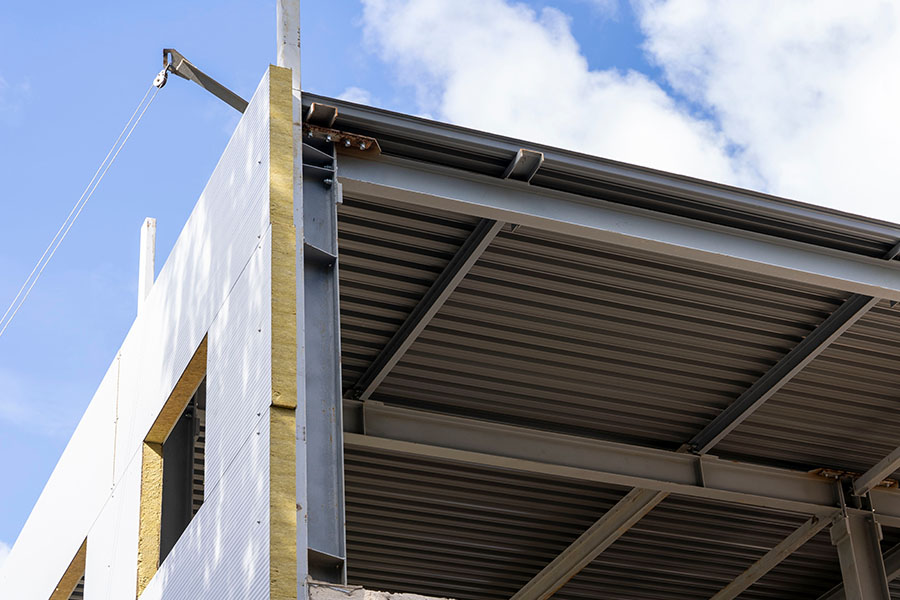
Metal roofing doesn’t just perform well, it also gives owners a lot more say in how a building looks. These systems now work with a broad mix of commercial styles, from plain industrial buildings to more polished retail or office spaces.
Commercial metal roofing is available in standing seam, exposed-fastener, and specialty profiles that can mimic slate or tile. Each option fits a different building type and budget, so owners can lean toward looks, cost, or a mix of both.
Color choice is broad too. Common palettes include 20 to 30 colors, and custom matching is available at a premium. If long-term color hold matters, it’s worth specifying PVDF coatings such as Kynar 500 or Hylar 5000. These finishes typically show less than 5 Delta E units of color change after 30 years of exposure, which is barely noticeable to the human eye.
Site-formed panels can also create long, continuous runs with fewer seams and a cleaner appearance. That extra design range makes it easier to work around rooftop equipment and plan for future upgrades without giving up a polished look.

10. Compatibility With Solar and Rooftop Equipment
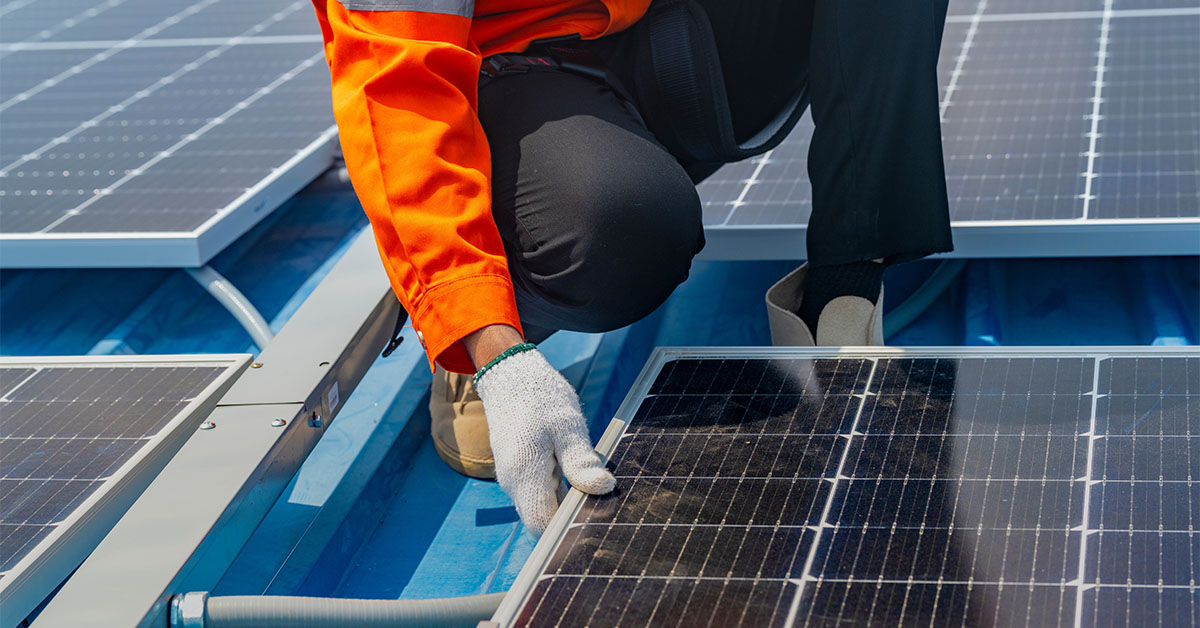
Metal’s long life and low-profile fastening system make it a strong base for rooftop solar and mechanical equipment. This durability simplifies commercial roof maintenance over the system’s life. Standing seam metal roofing supports clamp-on solar mounts without roof penetrations. Clamp-style hardware attaches right to the raised seams, which helps protect the roof warranty and lowers the chance of leaks.
The timing works well too. Because metal roofs often last longer than solar arrays, owners can avoid the expensive hassle of taking panels off and putting them back on just to replace the roof below.
That same roof-friendly setup also supports mechanical equipment well. Commercial metal roofs handle rooftop HVAC loads and equipment compatibility well. For buildings with heavy HVAC or rooftop equipment loads, specifying 22-gauge or 24-gauge steel provides the structural capacity needed.
Metal Roofing vs. Common Commercial Roofing Materials
Those upsides stand out even more when we compare metal with other common commercial roofing systems. Yes, metal roofing usually costs more at the start. But over a 50-year span, its longer service life can bring down total cost per square foot.
That’s the big reason metal often delivers better long-term value.
| Feature | Metal Roofing | Single-Ply (TPO/PVC/EPDM) | Built-Up Roofing (BUR) | Modified Bitumen |
|---|---|---|---|---|
| Lifespan | 40–70 years | 20–30 years | 20–30 years | 15–25 years |
| Weight | ~1.0 lb/sq. ft. (light) | Light | Up to 6 lbs/sq. ft. (heavy) | Moderate |
| Maintenance | Low | Moderate; seams need attention | Higher (coatings needed) | Higher |
| Cool-Roof Potential | High (with coatings) | High | Low | Moderate |
| Recyclability | 100% | Partially recyclable | Mostly non-recyclable | Mostly non-recyclable |
| Wind Performance | Excellent, 140+ mph | Moderate; seams need attention | Moderate | Moderate |
| Fire Performance | Class A, non-combustible | Class A (most) | Class A | Class A, but torch-applied installation carries fire risk |
| Solar Compatibility | Yes, clamp-style, non-penetrating mounts | Requires penetrations | Difficult | Difficult |
A few differences jump off the page. Metal lasts much longer than single-ply, BUR, and modified bitumen. It’s also much lighter than BUR, which can weigh up to 6 lbs/sq. ft.. That lower weight can matter a lot on large commercial buildings.
Metal also stands out on upkeep, wind resistance, and solar setup. Seams on single-ply roofs need closer attention, while metal can handle winds above 140 mph. And if solar is part of the plan, clamp-style, non-penetrating mounts give metal another edge.
Then there’s recyclability. Metal is 100% recyclable, and it can contain 25%–95% recycled content at the time of manufacture. Put side by side with systems that are only partly recyclable or mostly non-recyclable, that gives metal a clear edge on sustainability.
Once we see that comparison, the next step becomes choosing the right contractor. Even the best roofing system still depends on proper design and installation.

How to Choose the Right Commercial Metal Roofing Contractor
Once you’ve picked the roof type, installation is what makes or breaks the result. With commercial metal roofing, the small details matter. Panel attachment, flashing, and trim work all play a big part in how the roof holds up over time.
Start with certifications. We should look for manufacturer-certified crews that use the right clip system, flashing, and panel details.
When we compare proposals, it helps to look past the top-line price. Check the panel gauge, profile, coating, insulation, and flashing details, along with wind and fire ratings. A good contractor should also give us a clear scope of work, an inspection report, and a lifecycle cost comparison. Just as important, they should review whether the roof deck or purlins can handle the selected system and any added load from a retrofit.
Insurance is non-negotiable. Confirm that the contractor carries general liability and workers’ compensation coverage.
If the current roof is getting older but is still structurally sound, it’s worth asking about a metal roof restoration or a recover system.
We should also ask for a written maintenance plan that covers inspections and sealant checks.
For Tulsa owners, local experience matters just as much as certification. For Tulsa-area commercial properties, Pro-Tech Roofing provides licensed, insured, manufacturer-certified metal roofing services, including inspections, repairs, replacement, maintenance, and restoration.
The right contractor helps turn metal roofing’s upsides into long-term performance.
Conclusion
Metal roofing costs more at the start, but the long life changes the cost picture. Standing seam systems usually run $12.00 to $16.00 per square foot installed, and across a 50-year service life, that comes out to about $0.18 to $0.32 per square foot per year.
The break-even point usually lands between years 18 and 25. That payback comes from the durability, efficiency, and low upkeep covered above. After that, lower energy use, less maintenance, and better storm performance help drive the return.
For commercial owners, this choice is about long-term value compared to commercial asphalt shingle roofing, not just the first invoice. A metal roof with decades of life left can support appraisals and financing. For Tulsa-area commercial properties, Pro-Tech Roofing offers licensed, insured, manufacturer-certified metal roofing services, including inspections, installation, and restoration. A professional assessment is the best next step.
FAQs
Is metal roofing worth the higher upfront cost?
Yes. For many commercial properties, metal roofing is worth the higher upfront cost because it can last 40 to 70 years. That longer lifespan can help us avoid frequent roof replacements, along with the downtime and disruption that often come with major roofing work.
Over time, the added upfront cost can balance out through lower maintenance needs, reduced cooling costs from reflective coatings, and even lower insurance premiums in some cases. Pro-Tech Roofing can help us review these long-term gains for your building.
Can a metal roof go over my existing commercial roof?
Yes. We can often install a metal roof over an existing commercial roof with a retrofit or recover system.
That can cut tear-off costs, reduce waste, and limit disruption to day-to-day business. Before we move ahead, though, a professional structural inspection is needed to make sure the roof deck can support the new system and that there’s no trapped moisture.
Which metal roofing system is best for my building?
The best metal roofing system comes down to how your building is used, what you want to spend, and how it needs to perform over time.
Standing seam is often the premium pick for office and architectural buildings. Its concealed fasteners can help cut down on leaks and maintenance, which is a big deal if you want a cleaner look and fewer headaches later.
For warehouses and distribution centers, through-fastened panels like PBR or R-panels are a common lower-cost choice. They’re widely used because they can make sense for large facilities where budget matters just as much as function.
Pro-Tech Roofing can help match your facility with the right system.