
Hiring a roofer is a major investment. We recommend that you never go with the first contractor you find or simply choose the cheapest bid. Asking the right questions can save you from costly mistakes, poor quality work, or even legal troubles.
Note: This post was originally published in September 2025 and has been fully updated in 2026.
Here are five critical questions we suggest you ask before signing any contract:
- Do you have a license and insurance? Confirm they are legally qualified and insured to protect you from liability. Verify their credentials and ensure their insurance covers general liability and workers’ compensation.
- Do you have experience with my type of roof? Roofs vary by material – metal, slate, asphalt, or tile. Choose a contractor with proven experience in the specific material and style you need.
- What warranties do you provide? Look for both a manufacturer warranty (materials) and a workmanship warranty (installation). Written warranties are a must.
- Can you provide a written estimate and timeline? A detailed estimate helps you avoid surprise costs. A clear timeline sets expectations for project completion.
- Can you give me local references? Speak to past customers to verify their reliability, quality of work, and ability to meet deadlines.
These questions help you choose a roofer who is reliable, experienced, and transparent. This ensures your roof is installed safely and lasts for years. Keep reading for our tips on verifying credentials, warranties, and more.
TIP: 5 Questions You MUST Ask A Roofer
1. Do You Have a License and Insurance?
A roofing license is your first line of defense. When hiring a contractor, this should be the very first question you ask. Licensing and insurance are your safety net. They protect you from legal troubles, financial losses, and shoddy work.
A contractor without the proper credentials exposes you to unnecessary risks. We always advise you to ask for proof and verify it personally. State requirements for licensing vary significantly in 2026. For instance, states like Florida and California maintain strict licensing rules.
Others, such as Texas, Colorado, and Indiana, do not require state-level licenses. However, local jurisdictions in these states often have their own rules and requirements. Licensed contractors typically meet rigorous standards, including exams and training. Registered contractors often only need to provide proof of insurance and pay a fee.
When it comes to insurance, you must confirm two key types: general liability insurance and workers’ compensation insurance. Liability covers property damage and injuries to third parties. Workers’ compensation covers worker injuries on your property. Both must be current and sufficient for your specific project.
Without workers’ compensation, you could end up responsible for medical expenses if a worker gets injured on your roof. We suggest you be wary of expired certificates or inadequate coverage. These protections ensure your contractor is serious about professionalism and reliability.
How to Check Their Credentials
Verifying a contractor’s credentials is more than just looking at a piece of paper. You need to ensure they are legitimate. Start by requesting the contractor’s license number and a current Certificate of Insurance (COI). Avoid relying on photocopies, as these could be outdated or altered.
To verify licensing, visit your state’s official licensing board website. Most states offer searchable online databases. You can look up contractors by their license number or name. These databases often provide details like license status, expiration dates, disciplinary actions, and any complaints filed.
If your state does not require licenses, contact your local building department or city hall to check for local registration rules. Many local governments maintain their own contractor databases. These can confirm whether the contractor is authorized to work in your area.
For insurance verification, call the insurance company listed on the COI. Confirm that the policy is active, covers the duration of your project, and includes both general liability and workers’ compensation. The insurance agent can also verify the coverage amounts and ensure the certificate has not been tampered with.
Watch out for these red flags:
- Contractors who cannot provide a license number on the spot.
- Expired insurance certificates.
- Claims that they “do not need” licenses or insurance.
- Rushing you into starting work before you can verify their credentials.
2. Do You Have Experience with My Type of Roof?
Roofing specialization is vital. Not all roofers are skilled in every type of material. A contractor who is great with asphalt shingles might not have the expertise needed for slate. Someone proficient in metal roofing may struggle with the complexities of historic tile restoration.
Each material – whether it is asphalt, metal, slate, or tile – requires unique techniques. Hiring an inexperienced roofer can lead to costly mistakes. For example, improper fastenings on a metal roof can cause structural issues. Poor slate installation might result in significant water damage.
Ask specific questions about their experience. Have they handled projects like yours in the past two years? Do they hold certifications from manufacturers for your roofing type? Certifications often indicate specialized training. They can also come with better warranties, giving you extra peace of mind.
How to Review Their Past Work
To see if their claims hold up, take a close look at their previous projects. Ask for a portfolio that includes work similar to what you need. A good contractor will have photo documentation of their completed jobs and will be proud to show off their skills.
Request before-and-after photos of at least three recent projects involving your roofing type. Pay attention to details like clean edges, proper flashing installation, and overall craftsmanship. Look for consistency across multiple projects. If possible, visit some of their recent job sites to see the work in person.
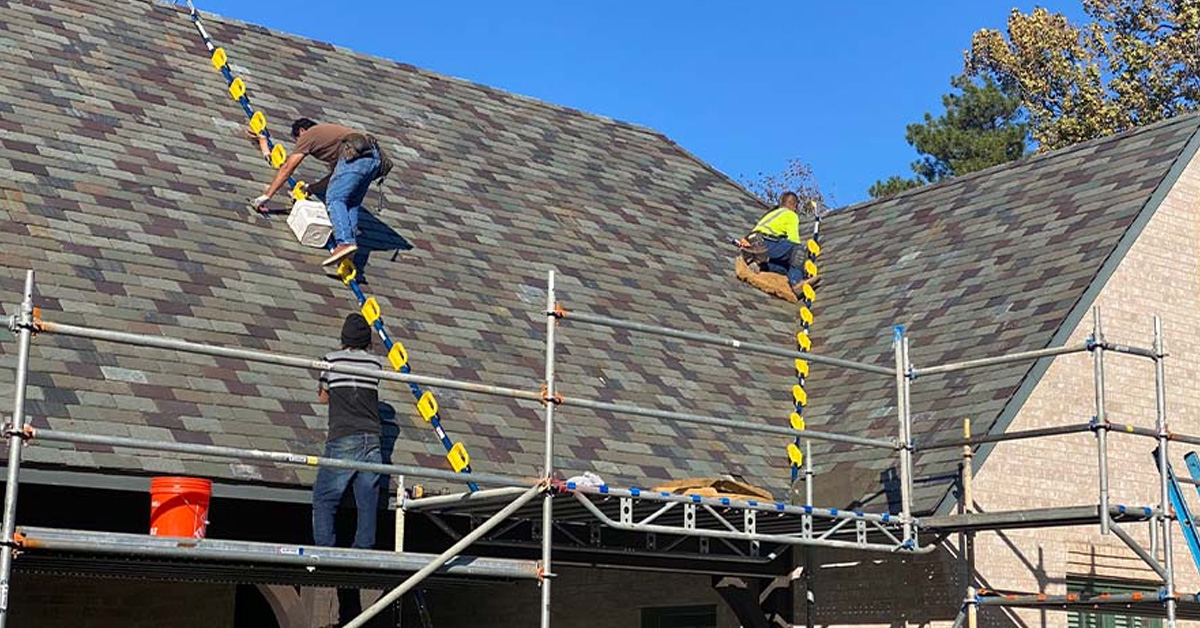
Check if they have specialized training or certifications for your roofing material. Manufacturers such as GAF and Owens Corning offer training programs. These ensure contractors are up to date on proper installation methods.
3. What Warranties Do You Provide?
A reliable warranty is essential to safeguard your investment. Without proper coverage, repair expenses can spiral out of control. Just as a contractor’s credentials and experience are crucial, solid warranties ensure peace of mind and long-term quality.
Roofing warranties generally fall into two categories: Manufacturer warranties and workmanship warranties. Manufacturer warranties typically cover material defects for 20 to 50 years. Workmanship warranties, which often last about 1 to 10 years in the 2026 market, protect against installation errors.

Comparison Table: Manufacturer vs. Workmanship Warranties
| Feature | Manufacturer Warranty | Workmanship Warranty |
|---|---|---|
| Coverage Focus | Material defects and premature failure | Installation errors and labor issues |
| Typical Duration | 20-50 years | 1-10 years (5+ years recommended) |
| Who Provides | Material manufacturer | Roofing contractor |
| Transferability | Usually transfers automatically | Often requires notification and fees |
sbb-itb-66ccccd
4. Can You Give Me a Written Estimate and Timeline?
After verifying a contractor’s qualifications, the next step is to request a written estimate and timeline. These documents are crucial for ensuring clarity and professionalism throughout the project.
A written estimate eliminates the risk of misunderstandings that can arise from verbal quotes. It provides a detailed breakdown of costs and serves as a financial guide. This helps you avoid surprise charges or “scope creep” where unexpected expenses appear mid-project.
What Should Be in a Professional Estimate
- Disposal fees: These cover the removal of old materials and typically range from $400 to $950 in 2026.
- Permit costs: Permit fees vary by municipality, usually between $150 and $600.
- Contingency allowances: A smart contractor includes a 10 to 15% contingency to cover unexpected issues discovered during the tear-off.
Comparison Table: Sample 2026 Estimate Breakdown
| Cost Component | Typical Range (2026) | Sample Amount |
|---|---|---|
| Labor | $9,500-$14,000 | $12,000 |
| Materials | $7,000-$10,500 | $8,500 |
| Total Project Cost | $19,050-$29,050 | $24,000 |
5. Can You Give Me Local References?
Once you have confirmed a contractor’s credentials, the final step is to check local references. This help you gauge their reliability and professionalism. A trustworthy roofer should have no problem providing contact information for recent customers in the Tulsa area.
Questions to Ask References
- Timeline adherence: “Was your project completed on schedule, or were there delays?”
- Cost transparency: “Did the final cost match the estimate, or were there unexpected charges?”
- Communication: “How was their communication throughout the project?”
Conclusion: Make a Smart Decision for Your Roofing Project
With 2026 replacement costs averaging $13,800 and climbing to $95,000 for high-end options like copper, choosing the right roofing contractor is essential. Verifying licensing, checking experience, and reviewing detailed estimates ensures your contractor meets all necessary standards.
Considering the average roofing company only operates for about four years, it is important to select seasoned professionals who will be around to honor their warranties. A poor choice could result in repairs averaging $1,500, with major fixes reaching as high as $10,000.
“Hiring the right roofing contractor is a crucial decision that impacts the longevity, quality, and safety of your home.” – Smith & Sons Roofing
FAQs
Why should I check if a roofer is licensed and insured before hiring them?
Checking if a roofer is licensed and insured is a vital protective step for your property. A valid license shows the contractor has met required qualifications. Insurance shields you from unexpected costs like property damage or worker injuries during the project.
How can I tell if a roofer has experience with my type of roof?
To confirm a roofer’s experience, find out if they have worked with the exact material and brand your roof requires. We suggest you request photos or references from those specific jobs.
What should I check in a roofing warranty to make sure I’m fully protected?
A solid roofing warranty must cover both materials and workmanship. In 2026, you should look for at least 10 years of coverage for workmanship and 25 years or more for materials.