
When your roof is damaged, knowing your state’s insurance claim deadlines is critical to avoid losing compensation. Each state has unique rules, but here are the key takeaways:
- Oklahoma: Most policies require claims within 12 months, with a two-year window for hidden wind or hail damage. Repairs must be completed within six months for full replacement cost coverage. Lawsuits are often limited to one year.
- Texas: Homeowners generally have 12 months to file. Insurers must acknowledge claims within 15 days and resolve them in 15-45 business days, depending on documentation.
- Kansas: Deadlines vary by policy, typically 6-12 months. Some policies allow as little as 30 days for notification.
- Colorado: Policies usually provide one year to file. Prompt written notice is required, and upgrades beyond original materials are out-of-pocket.
- Missouri: No statewide deadline, but policies often require claims within 60 days to two years. Lawsuits have a five-year limit.

Act quickly by spotting and documenting damage, filing promptly, and understanding your policy terms. Missing deadlines can result in denied or reduced payouts. Check your state’s specific guidelines for more details.
1. Oklahoma
Initial Claim Filing Deadline
In Oklahoma, the deadline for filing an insurance claim depends on your policy. Most policies require claims to be filed within 12 months, but fire insurance mandates immediate written notice.
For hidden roof damage, House Bill 3495, passed in May 2022, extends the filing window. You now have up to 24 months (two years) from the date of loss to file a claim if wind or hail damage isn’t visible without a professional inspection. The bill states:
"Any policy that specifies a time limit covering damage to a roof due to wind or hail must allow the filing of claims after the first anniversary but no later than twenty-four months after the date of the loss if the damage is not evident without inspection."
Once you’ve reported damage, it’s essential to know how insurers manage the claim process.

Claim Acknowledgment Timeframe
After you notify your insurer of a loss, they must provide the necessary forms within 30 days. If the investigation takes longer than 45 days, the insurer is required to send written updates every 45 days, explaining the reasons for the delay.
Final Claim Resolution Deadline
Once you’ve submitted a properly completed proof of loss – usually required within 60 days of the event – insurers have 45 days to notify you of their decision. Payment must be made within 60 days after the loss amount is determined. The investigation itself should be wrapped up within 60 days of receiving your proof of loss and cannot exceed 120 days, unless fraud or arson is suspected. In cases of a Governor-declared weather catastrophe, these deadlines can be extended by 20 additional days.
It’s also important to meet specific state requirements outlined in your policy.

State-Specific Requirements
Oklahoma policies include unique conditions that homeowners must follow. For instance, repairs or replacement work must be completed within six months of the loss date to receive withheld replacement cost payments. While the general statute of limitations for breach of contract is five years, insurers often limit the time to file a lawsuit to just one year from the date of loss. To help resolve disputes without going to court, the Oklahoma Insurance Department offers the EAGLE Mediation Program (Ending Arguments Gently, Legally and Economically).
sbb-itb-66ccccd
Don’t lose Your roof insurance depreciation money!
2. Texas
In Texas, the process for filing roof insurance claims is relatively straightforward, with a 12-month filing window and clear acknowledgment deadlines.
Initial Claim Filing Deadline
Homeowners in Texas have up to 12 months from the date of the incident to file a roof insurance claim. Given the state’s frequent hailstorms – more than any other state – roof damage claims are common. In 2020 alone, insurers paid nearly $6 billion in direct losses and legal fees related to such claims.

Claim Acknowledgment Timeframe
Under Texas law (Chapter 542), insurers are required to acknowledge claims in writing within 15 days of receiving them. Once all necessary documentation is submitted, they must decide on the claim within 15 business days, though this can be extended to 45 days if the insurer provides written notice explaining the delay.
Final Claim Resolution Deadline
If a claim is approved, insurers are obligated to issue the payout within five business days. However, in cases where fraud is suspected, the decision process may take up to 30 days. These timelines can also be extended following significant natural disasters. These rules emphasize the state’s focus on timely claim resolution. Understanding the factors behind roof insurance claim denials and approvals can help homeowners navigate these deadlines more effectively.
State-Specific Requirements
Texas law has additional requirements for lawsuits related to insurance claims. Policyholders must provide a 61-day written notice before filing a lawsuit. After this notice, insurers have 30 days to request an inspection, which must then be completed within 60 days. It’s also important to confirm whether your policy pays based on Replacement Cost or Actual Cash Value, as some insurers may shift to a depreciated value over time.
3. Kansas
Initial Claim Filing Deadline
Kansas doesn’t impose a state-mandated deadline for filing insurance claims. However, most insurers require claims to be submitted within 6 to 12 months. Some policies are stricter, demanding notification within 30, 60, or 90 days. While some policies only ask for "prompt notice", others set firm deadlines for initial notification. To avoid complications, check your policy’s "notice of loss" section for specific timelines. Missing these deadlines could lead insurers to argue that the delay constitutes neglect.

State-Specific Requirements
Kansas’ unique weather patterns play a big role in how insurance policies are enforced. Located in "Hail Alley", the state frequently experiences severe hailstorms, with hailstones sometimes exceeding 2.5 inches in size. This makes timely inspections after storms especially critical. Standard homeowners insurance in Kansas typically covers sudden or accidental damage caused by wind, hail, fire, lightning, and falling trees. However, it won’t cover damage from gradual wear and tear or neglect. Getting a professional inspection and emergency roof repair right after a storm can help document new damage, boosting your chances of claim approval.
If you have a mortgage, keep in mind that insurance checks usually list the mortgage company as a payee. This can delay access to funds, as lenders often hold the money in escrow and release it in stages.
4. Colorado
Initial Claim Filing Deadline
In Colorado, insurance policies typically provide a one-year window from the date of damage to file a claim. However, you must also submit prompt written notification to your insurer. Missing the deadlines outlined in your policy could lead to claim denials or reduced payouts.

State-Specific Requirements
Colorado insurers usually replace your roof with materials of the same "like, kind, and quality" as the original. If you decide to upgrade to more expensive materials, you’ll need to cover the cost difference yourself. For instance, switching from asphalt shingles to tile might require a structural engineer to confirm your home can handle the added weight.
In Colorado Springs, specific building codes come into play. If your roof decking has gaps larger than ¼ inch, contractors are required to overlay 4′ x 8′ sheets to comply with current standards. Checking your attic for such gaps before filing a claim can help you anticipate any extra expenses.
Roof replacement costs for a standard single-family home in Colorado Springs generally range from $14,000 to $20,000. It’s worth noting that due to the roof’s pitch, its surface area is about 30% larger than the home’s footprint.
Next, we take a look at Missouri’s roof insurance deadlines.
5. Missouri
Initial Claim Filing Deadline
Missouri doesn’t have a statewide statutory deadline for filing roof insurance claims. Instead, the timeline depends entirely on your individual insurance policy. Policies in Missouri can vary significantly – some give you up to two years, while others require filing within 60 days to one year after the storm. Many policies use vague terms like "prompt notice" or "within a reasonable time", making it essential to carefully review your policy’s language.
"Missouri doesn’t enforce a statewide deadline for claims, but every insurance company sets its own expectations." – Manor Roofing & Restoration
Waiting too long – usually beyond 30 to 60 days – could lead to claim denial. Insurers may argue that delays allowed the damage to worsen due to neglect.
Claim Acknowledgment Timeframe
In Missouri, insurance companies are required to acknowledge property claims within 10 working days after receiving notification. They must also respond to follow-up communications within the same time frame. Most roof insurance claims are processed within 30 to 60 days, with approvals often occurring three to six weeks after filing.
Once the claim is acknowledged, the resolution process follows a specific timeline.
Final Claim Resolution Deadline
After receiving a properly executed proof of loss, insurers in Missouri must notify you of their decision – whether they accept or deny the claim – within 15 working days. If the investigation takes longer than 15 days, they are required to provide updates every 45 days. Once the loss amount is determined, payment must be made within 60 days.
These timelines form the foundation of Missouri’s claim resolution process.
State-Specific Requirements
Missouri law requires homeowners to take immediate steps – like tarping the roof when safe – to prevent further damage. Additionally, you’ll need to submit a formal proof of loss document, typically within 60 days of the incident. For policies with Replacement Cost Value (RCV), insurers issue two payments: the first covers the Actual Cash Value (minus your deductible), and the second pays the recoverable depreciation once repairs are completed.
Unlike some states, Missouri law prevents insurers from reducing the statute of limitations through policy language. Homeowners have up to five years from the date of loss to file a lawsuit for bad faith or breach of contract. If your claim is denied without reasonable cause, you might have grounds to sue for "vexatious refusal to pay", which could allow you to recover the claim amount, attorneys’ fees, and even punitive damages.
These details highlight Missouri’s distinct approach compared to other states.
Next, we’ll see how these deadlines compare across the states discussed.
Comparing State Deadlines: Benefits and Drawbacks
After examining the deadlines across states, it becomes clear that each approach has its own set of advantages and challenges. These differences shape how homeowners navigate roof insurance claims in Oklahoma and highlight where Oklahoma’s system excels – or falls short.

Oklahoma’s deadlines are structured to encourage swift action. Insurers must acknowledge claims within 30 days and typically complete investigations within 60 days, with a maximum limit of 120 days. This setup is aimed at minimizing delays. However, the timeframe for filing lawsuits in Oklahoma is stricter than the general contract statute, which can feel limiting for some.
States handle deadlines differently – some rely on fixed statutory timelines, while others defer entirely to individual policy terms. This makes it essential for homeowners to carefully review their policies to understand the specific deadlines that apply.
One key benefit in Oklahoma is the requirement for insurers to send written notice one year after the date of loss if a statute of limitations or policy deadline is approaching. This rule helps ensure homeowners are informed and don’t unintentionally miss critical deadlines. Additionally, during Governor-declared disasters, the Insurance Commissioner can extend claim deadlines by 20 days, offering much-needed flexibility during emergencies.
These differences highlight the importance of staying informed about your policy. The main trade-off with roof insurance claim deadlines lies in the balance between clarity and adaptability. While fixed statutory deadlines offer clear guidance, flexible policy terms can leave room for uncertainty about what constitutes “prompt” notice.
What Oklahoma Homeowners Need to Know
Pay close attention to your policy deadlines. In Oklahoma, most property insurance policies give you 12 months from the date of the damage to file a claim. However, it’s crucial to act quickly. File and document the damage within 30–60 days to clearly tie it to a specific event. Most policies also require "immediate" or "prompt" written notice, and you’ll need to submit a formal proof of loss within 60 days of the incident. Taking these steps early can make the claims process much smoother.

Document Everything
Before making any repairs, thoroughly document the damage with photos and videos. This evidence will be critical when your adjuster evaluates the claim. While you’re required to take steps to prevent further damage – like covering a leaking roof with a tarp – be sure to save all receipts for materials and labor. These temporary repairs are typically reimbursable, and having detailed records strengthens your case.
Consider a Professional Inspection
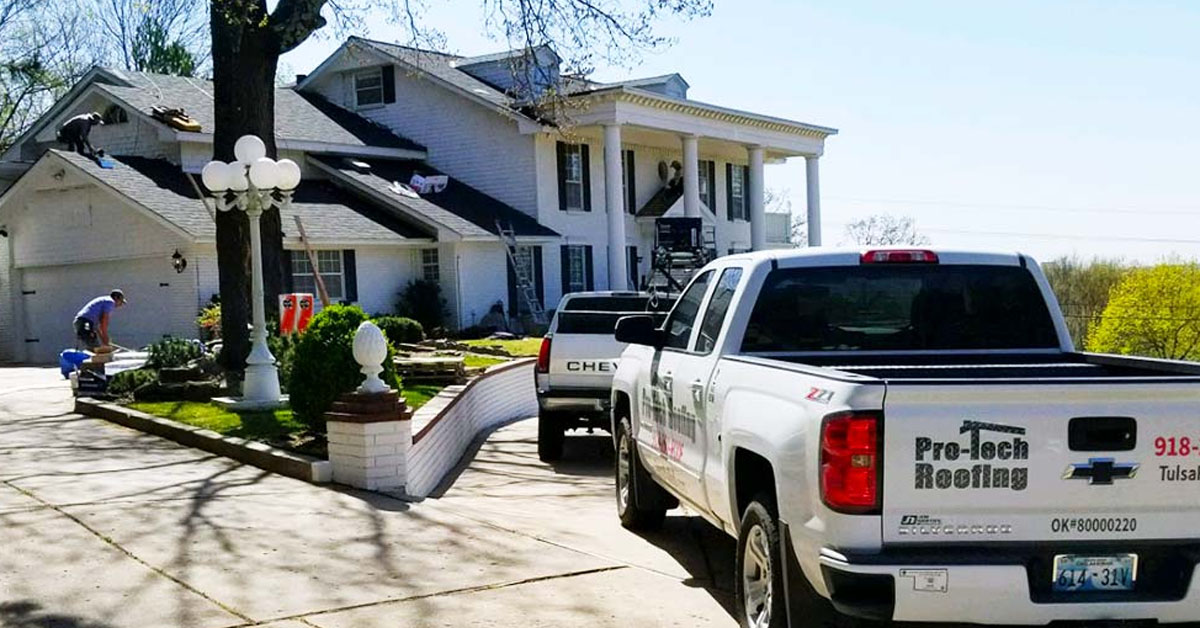
Sometimes, it’s better to avoid filing a claim if the repair costs are close to your deductible. A professional inspection can help you weigh your options. For example, Pro-Tech Roofing offers free roof inspections and can identify hidden issues like granule loss or lifted nails that might not be obvious. If you do file a claim, having a local contractor present during the adjuster’s walkthrough can ensure nothing is missed, and the scope of loss reflects accurate local costs for materials and labor.
Keep Legal Deadlines in Mind
Be aware of your lawsuit deadline. While Oklahoma law allows five years to file most contract-related lawsuits, your property insurance policy may limit this to just one year from the date of loss. If your insurer fails to respond within 60 days after receiving your proof of loss, Oklahoma law (36 O.S. § 3629) may allow attorney fees to be shifted in your favor. For policies with replacement cost coverage, you generally have six months to complete repairs and collect any withheld depreciation payments.
For additional help, reach out to the Oklahoma Insurance Department’s Consumer Assistance Division at 1-800-522-0071. They also offer the EAGLE mediation program for claims disputes. Oklahoma Insurance Commissioner Glen Mulready has stated:
"We want everyone affected to know that if you have questions about your policy, need assistance with the claims process, or just aren’t sure where to start, our Consumer Assistance Division is ready to support you every step of the way".
Conclusion
Deadlines for property insurance claims vary significantly across states, and Oklahoma stands out for its stricter timelines. Many policies in the state impose a one-year limit to file a lawsuit for property insurance claims. Additionally, if you have a replacement cost policy, repairs often need to be completed within six months to qualify for full benefits. Missing these critical deadlines can lead to reduced payouts or even outright denial of your claim, making timely action a necessity.
To protect your claim, act quickly. Start by documenting all damage thoroughly and filing your claim as soon as possible. Partnering with a local roofing professional can make this process much smoother. For instance, Tulsa-based Pro-Tech Roofing offers free roof inspections to assess whether your damage exceeds your deductible. Having an experienced contractor present during the insurance adjuster’s walkthrough can help identify less obvious issues, such as granule loss or lifted nails, ensuring repair estimates align with local costs.
If you’re feeling overwhelmed by the claims process, the Oklahoma Insurance Department’s Consumer Assistance Division is a valuable resource for guidance. When it comes to roof damage claims, time is of the essence. Staying proactive and informed can help you secure the maximum benefits from your policy.
FAQs
What should I do if I find hidden roof damage after the insurance claim deadline in Oklahoma?
If you’ve discovered hidden roof damage after the insurance claim deadline has passed in Oklahoma, the first step is to carefully review your homeowner’s insurance policy. Most policies have specific timeframes for filing claims – typically within one or two years from when the damage either occurred or was found. That said, some policies may include exceptions for damage that wasn’t immediately noticeable.
Reach out to your insurance company as soon as possible to explain your situation. They might provide insight into whether an extension or a new claim can be filed, particularly if the damage was truly hidden or if special circumstances are involved. Partnering with a professional roofing company, like Pro-Tech Roofing, can also make a big difference. Their team can conduct a detailed inspection, document the damage, and supply the necessary evidence to strengthen your case. Acting promptly and keeping open communication with your insurer will give you the best chance of addressing the issue successfully.
What steps should I take to meet Oklahoma’s roof insurance claim deadlines?
To stay on top of Oklahoma’s roof insurance claim deadlines, it’s crucial to act quickly after spotting damage, especially following severe weather events like storms or tornadoes. State law requires you to notify your insurance company within a reasonable timeframe. Once you submit properly documented proof of loss, your insurer is obligated to respond within 60 days.
Make sure to document all damage thoroughly. Take clear photos and videos, and jot down detailed notes before starting any repairs. It’s also a good idea to review your policy to understand whether your coverage is based on replacement cost or actual cash value, as this impacts how your claim will be handled. If you’re unsure or need extra help, check out resources from the Oklahoma Insurance Department or contact them for support. Taking these steps can help the process go more smoothly and ensure you meet state requirements.
What happens if you miss the deadline to file a roof insurance claim?
Missing the deadline to file a roof insurance claim can lead to serious financial trouble. Most insurance policies enforce strict time limits for filing claims, and missing this window could result in a denied claim. In that case, you’d be left covering the full cost of roof repairs or replacement on your own.
To avoid this, make sure you’re aware of the specific filing deadlines outlined in your policy and any state-specific rules. For example, homeowners in Oklahoma need to carefully review their insurer’s requirements and act promptly after roof damage occurs. If the process feels overwhelming or unclear, reaching out to a professional roofing company like Pro-Tech Roofing can help you navigate the process and ensure your claim is submitted correctly and on time.